
FOH & BOH Systems Framework for Restaurant Performance
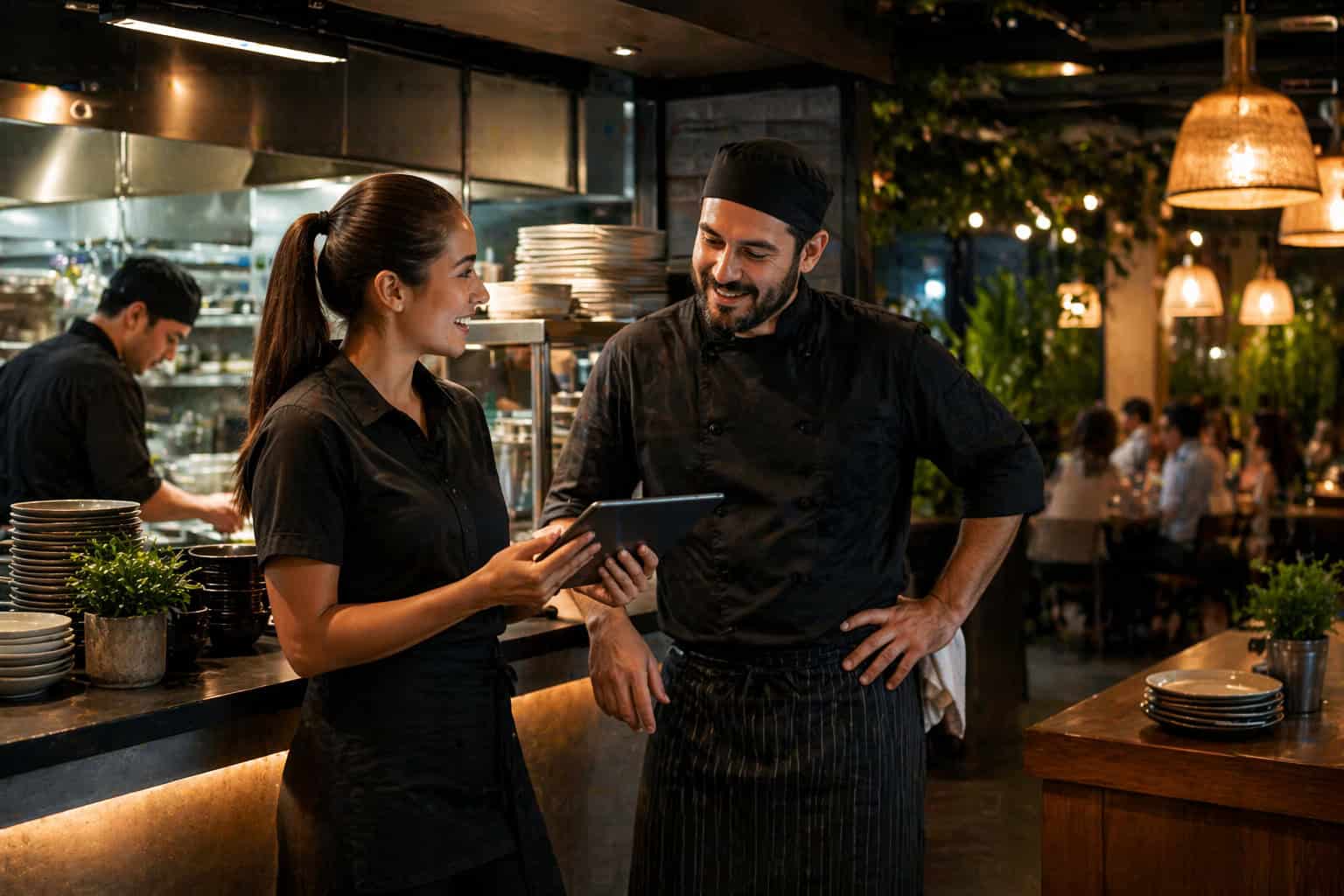
Most restaurants are busy. Very few are structurally integrated.
When pressure rises, execution fractures. Ticket times stretch. Servers oversell. The kitchen compresses. Managers intervene emotionally. Stress increases. Margins quietly erode.
This is not a staffing issue. It is not a culture issue. It is an architectural issue.
A properly engineered FOH & BOH systems framework integrates revenue generation, kitchen production, labor control, communication flow, and accountability into one unified operating structure. When structure governs execution, performance stabilizes. When structure is weak, friction becomes normal.
Before vs. After: The Structural Contrast
Without Integrated Systems
- Revenue overrides kitchen capacity
- Managers firefight during peak hours
- Comps are emotional and inconsistent
- Ticket times fluctuate unpredictably
- Waste is tolerated
- Performance depends on personalities
With an Integrated Framework
- Pacing matches production capacity
- Managers supervise systems, not chaos
- Recovery follows defined protocol
- Ticket times stay within target ranges
- Waste becomes measurable and correctable
- Performance becomes transferable and scalable
How the Framework Operates During Live Service
Consider a Saturday at 7:00 PM.
1. Forecast Confirmation. Managers confirm covers, staffing, prep completion, and station readiness.
2. Capacity Alignment. Maximum covers per hour are compared against defined station throughput.
3. Service Pacing Control. Hosts regulate seating intervals to protect ticket flow.
4. Production Execution. Expo maintains prioritization discipline and monitors station saturation.
5. Real-Time Monitoring. Managers track ticket time variance, labor productivity, and complaint frequency.
6. Post-Shift Review. KPIs are captured and compared against targets.
This sequence transforms service from reactive survival into engineered execution.
Measuring Pressure & Bottlenecks in Real Time
Ticket Time Variance
Average time alone is insufficient. Monitor variance range. Large variance signals instability and uneven station load.
Station Throughput Saturation
Each station has a production ceiling. Exceed it and quality collapses. Track covers per hour against capacity benchmarks.
Escalation Frequency
Count how often managers intervene. Frequent intervention signals structural weakness rather than staff incompetence.
The Core Systems Architecture
Front of House Systems
Service Pacing System — Controls covers per hour, reservation distribution, and server load limits.
Revenue Productivity System — Aligns staffing decisions with sales per labor hour.
Guest Recovery Framework — Defines comp thresholds and escalation authority.
Explore deeper revenue alignment: Front of the House Revenue System.
Back of House Systems
Production Capacity Modeling — Establishes realistic throughput ceilings.
Prep Flow Sequencing — Aligns preparation with service demand.
Waste & Remake Tracking — Converts errors into measurable margin control.
Expanded breakdowns: Restaurant Operations: BOH Systems and Kitchen Efficiency & Technology Enhancements.
Leadership Governance Layer
Systems fail without enforcement. Leadership determines whether structure holds or decays.
Enforce Capacity Discipline. Do not override structural ceilings for short-term revenue.
Protect Review Cadence. Weekly KPI reviews are non-negotiable.
Correct System Bypass Immediately. Informal shortcuts destroy structural integrity.
Model Structural Behavior. Leaders must operate inside the system they expect others to follow.
Manager Review & Enforcement Cadence
| Frequency | Metrics | Leadership Focus | Result |
|---|---|---|---|
| Daily | Sales vs labor, ticket variance, complaints | Stabilization | Immediate correction |
| Weekly | Prime cost, waste %, productivity | Structural alignment | Margin protection |
| Monthly | System drift, workflow bottlenecks | Architectural review | Process refinement |
| Quarterly | EBITDA stability, scalability readiness | Strategic planning | Growth validation |
Financial Impact & Enterprise Value
FOH & BOH alignment directly stabilizes prime cost. Stable prime cost protects EBITDA. Stable EBITDA increases enterprise valuation.
Integrated systems do not simply improve service nights. They improve asset value.
For profitability architecture: Restaurant Costing & Profitability Services.
Multi-Unit & Scalability Implications
Personality-driven restaurants cannot scale. Structure-driven restaurants can replicate performance across locations.
Integrated systems create leadership consistency, predictable margins, and investor confidence.
Structural Integration Diagnostic Tool
Score each category from 1 (weak) to 5 (fully enforced).
| Category | Question | Score |
|---|---|---|
| Capacity Modeling | Do you know your true maximum covers per hour? | |
| Ticket Stability | Is ticket variance monitored weekly? | |
| Waste Control | Is remake % reviewed weekly? | |
| Authority Clarity | Are pacing and comp thresholds documented? | |
| Review Discipline | Do FOH & BOH review KPIs together weekly? |
Scoring Guide:
- 22–25: Structurally integrated
- 15–21: Partially structured
- Below 15: Personality-dependent
Strategic Outcome
When FOH & BOH systems operate inside one engineered framework, execution stabilizes because service pacing aligns with production capacity. Stress decreases because authority becomes predictable. Margins strengthen because waste and labor drift are corrected systematically. Leadership evolves from reactive intervention to structural governance.
Busy restaurants create noise. Structured restaurants create control. Control compounds performance.
Next Step
If your operation feels reactive, personality-dependent, or margin-unstable, the issue is architectural.