
Restaurant Food Cost Calculator
(Free Tool to Reduce Costs Fast)

Food cost is one of the most important financial indicators in restaurant management. It measures how much of your menu revenue goes directly toward the ingredients required to produce each dish.

Many restaurant owners assume their pricing is correct because dishes continue to sell. However, ingredient costs fluctuate constantly, portion sizes may drift over time, and supplier prices can change. Without regular monitoring, even popular menu items can slowly become unprofitable.
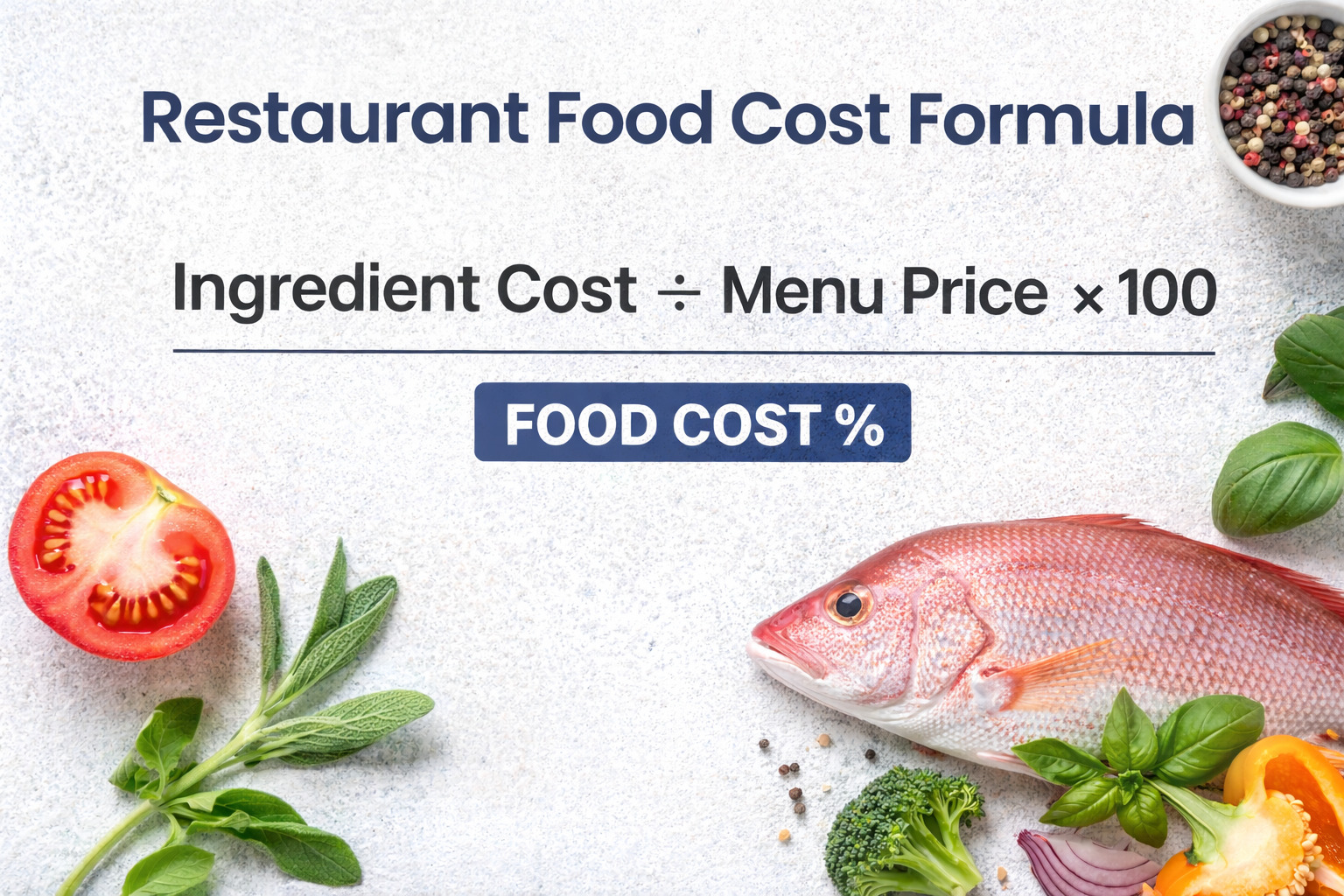
Restaurant food cost formula showing ingredient cost divided by menu price multiplied by 100 to calculate food cost percentage
Restaurant food cost formula used to calculate the food cost percentage of a menu item based on ingredient cost and menu price.

This free online restaurant food cost calculator allows you to evaluate both the food cost of a single menu item and the overall food cost performance of your restaurant.

Tip: Start by calculating the food cost of individual menu items. Then evaluate your overall weekly food cost to understand how purchasing, portion control, and kitchen operations affect profitability.

Key Profitability Metric:
Food and labor costs combine to create what operators call restaurant prime cost , the most important profitability metric in restaurant operations.

Related Pricing Tool:
Once food cost percentage is calculated, operators can use a structured restaurant menu price calculator to set menu prices that protect contribution margins.

Restaurant Food Cost Formula

Food Cost % = Ingredient Cost ÷ Menu Price × 100

Example:

Ingredient Cost: $3.90
Menu Price: $16

Food Cost = 24.38%

Free Online Restaurant Food Cost Calculator

Calculation Mode

Your Targets

Fixed costs may include rent, management salaries, utilities, or other overhead.

Food Cost Analysis

Enter numbers to calculate.

How to Interpret Your Food Cost

Within Target

Your menu pricing and ingredient purchasing are aligned with your restaurant’s financial structure.

Slightly High

Small operational inefficiencies may be developing. Review supplier pricing, portion control, and kitchen waste.

Too High

High food cost can quickly destroy margins. Immediate adjustments to menu pricing, purchasing, or inventory systems may be required.

Once you’ve calculated your food cost, the next step is understanding what to adjust. If your numbers are higher than expected, it often indicates deeper issues with portion control, purchasing, or menu pricing. Working with a restaurant consultant in Vancouver BC can help you turn these results into a clear, structured action plan that improves your margins.

How to Interpret Your Food Cost

Operational Solutions for High Food Cost

Problem Operational Solution
Over portioning Standardize recipes and train kitchen staff
Supplier price increases Negotiate pricing or evaluate alternative suppliers
Menu items priced too low Adjust menu prices based on food cost targets
Inventory waste Implement weekly inventory tracking
Low margin dishes Apply menu engineering strategies

Typical Food Cost Benchmarks by Region and Restaurant Type

Food cost targets vary depending on restaurant concept, local ingredient pricing, labor costs, and rent levels. The ranges below represent aggregated observations from multiple restaurant markets worldwide and should be interpreted as general guidelines rather than strict rules.

Region Quick Service (QSR) Casual Dining Fine Dining
North America 22–28% 26–32% 30–38%
Western Europe 25–32% 28–35% 32–40%
Southern Europe 26–34% 30–36% 34–42%
Northern Europe 28–35% 32–38% 36–42%
Asia 18–26% 22–30% 26–35%
Australia / Oceania 24–30% 28–34% 30–38%

Benchmarks represent combined restaurant industry observations across several markets. Actual targets depend on rent levels, labor costs, menu pricing strategy, and purchasing systems.

Food Cost vs Prime Cost

Food cost alone does not determine restaurant profitability. Labor cost must also be considered. Together, food cost and labor cost form prime cost, the most important financial metric in restaurant management.

Learn more in our guide: Restaurant Prime Cost Explained

Prime cost provides a complete view of restaurant profitability. However, accurate pricing remains essential, and you can use the menu price calculator to ensure each item contributes properly to your overall margin structure.

FAQ — Restaurant Food Cost

Food cost measures the percentage of revenue spent on ingredients used to produce menu items.
Most restaurants operate between 25% and 35%, depending on concept, labor costs, and rent levels.
Contribution margin shows how much money remains after ingredient cost is deducted from the menu price. This amount must cover labor, rent, and profit.

If your margins are under pressure, start by reviewing your numbers. Calculate accurate pricing with the menu price calculator , identify cost issues using the food cost calculator , and track your overall performance through your prime cost .

Get Practical Restaurant Profitability Insights

Receive practical insights on restaurant profitability, cost control, menu engineering, and operational systems.

No spam. Just practical restaurant systems insights.

Or schedule a direct meeting with Chef Eric.

Book a Free Restaurant Consultation
Scroll to Top