Restaurant Inventory Management: Control Food Cost
Many restaurant operators begin investigating inventory systems when they notice the same frustrating pattern: restaurant food cost increasing even when sales remain steady. Over time the percentage creeps upward, margins tighten, and profitability becomes harder to maintain.
When restaurant food cost increasing becomes a recurring problem, the cause is rarely a single mistake. Instead, it usually reflects operational leaks in purchasing, storage, production, and inventory control.
Restaurant inventory management exists specifically to identify and correct these leaks before they damage profitability.
Why Restaurant Food Cost Increasing Often Points to Inventory Problems
When operators experience restaurant food cost increasing, the issue often begins with weak inventory systems. Without accurate tracking, it becomes difficult to understand where ingredients are being consumed or wasted.
- ingredients spoil before they are used
- over-ordering creates excess inventory
- portion sizes slowly increase
- prep yield is not monitored
- waste during service remains invisible
Individually these issues appear small. However, together they gradually push food cost percentages higher.
A deeper explanation of this problem can be found here: Why Restaurant Food Cost Keeps Increasing.
Food and labor costs combine to create what operators call restaurant prime cost , the most important profitability metric in restaurant operations.
Related Operational System:
Restaurants that track inventory also need structured restaurant waste management systems to reduce food loss and stabilize food cost percentages.
Restaurant Inventory Management Systems That Stabilize Food Cost
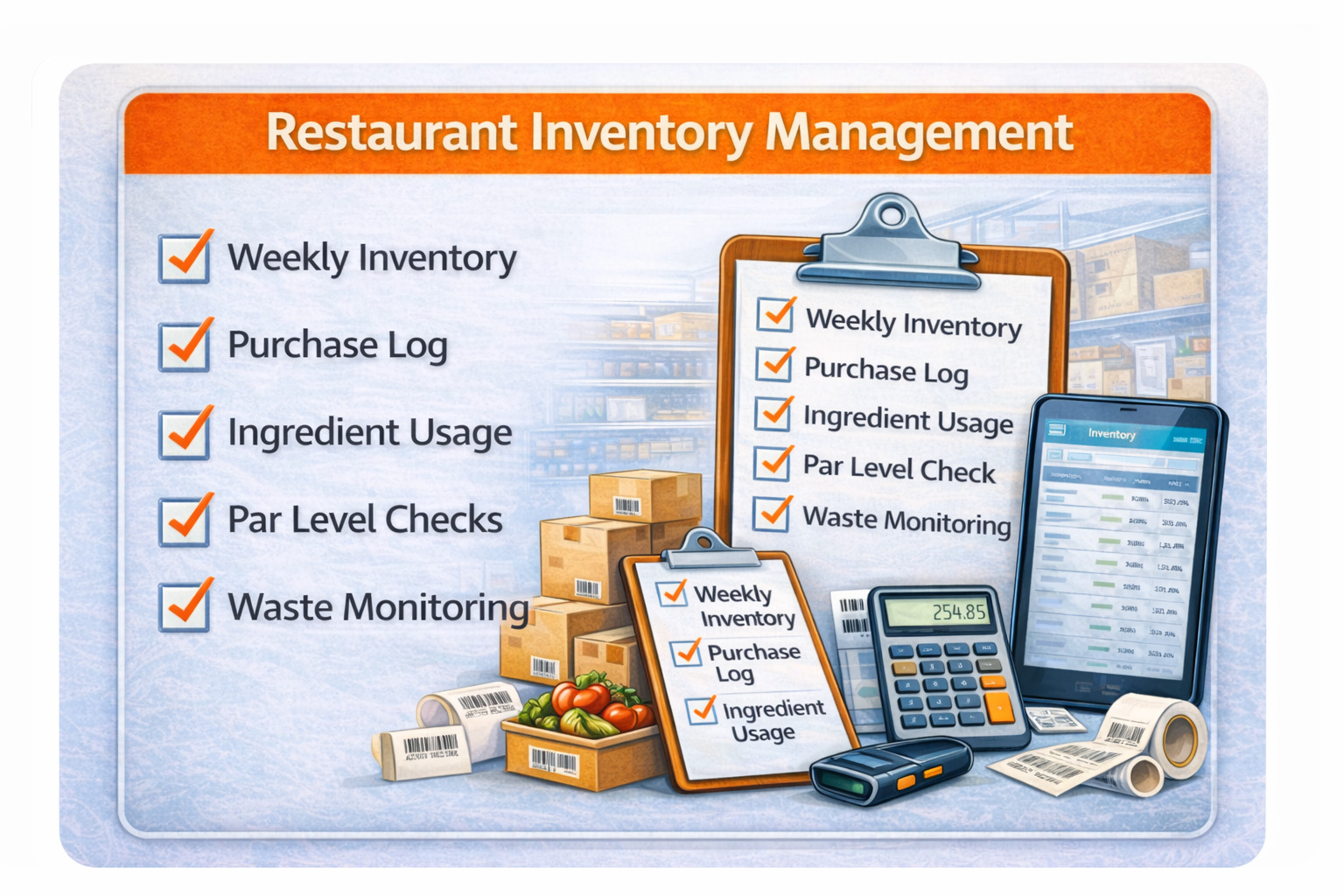
Professional kitchens follow a structured weekly inventory process.
- weekly inventory counts
- accurate purchasing records
- ingredient usage tracking
- comparison between theoretical and actual food cost
- adjustments to purchasing and production
When inventory data is tracked consistently, managers can quickly identify where restaurant food cost increasing originates.
Food Cost Calculation Using Inventory Data
Food Cost = Beginning Inventory + Purchases − Ending Inventory
Food Cost % = Food Cost ÷ Total Food Sales × 100
You can estimate your restaurant’s numbers using our Restaurant Food Cost Calculator.
Theoretical vs Actual Food Cost
Theoretical food cost represents the expected ingredient cost based on standardized recipes. Actual food cost comes from real purchasing and inventory numbers.
When restaurant food cost increasing appears in reports, the gap between these two numbers usually grows.
- portion inconsistencies
- prep yield errors
- inventory miscounts
- kitchen waste
Inventory management exists to close this gap and restore financial accuracy.
Restaurant Inventory Turnover Benchmarks
| Restaurant Type | Typical Inventory Turnover |
|---|---|
| Quick service restaurants | 8–12 turns per month |
| Casual dining restaurants | 6–8 turns per month |
| Fine dining restaurants | 4–6 turns per month |
| Cafés and bakeries | 8–10 turns per month |
High turnover generally indicates efficient purchasing and ingredient usage. Low turnover often suggests excess stock or slow-moving inventory.
Inventory Par Levels and Purchasing Discipline
Professional kitchens maintain par levels for key ingredients. Par levels define the minimum and maximum inventory required to maintain service.
- minimum stock levels protect service continuity
- maximum levels prevent spoilage
- purchasing becomes predictable
Proper par levels are one of the simplest ways to prevent restaurant food cost increasing.
Inventory Strategy Depends on Restaurant Location
Inventory levels should also reflect geographic realities.
Restaurants located in large cities such as Vancouver, Toronto, or New York often receive daily supplier deliveries. As a result, operators can maintain relatively low inventory levels.
However, restaurants located in remote areas must plan differently.
For example, a restaurant in Whistler may rely on a single highway for deliveries. If flooding, heavy snowfall, or landslides close that road, deliveries may stop for several days.
In these situations restaurants must maintain higher inventory levels to ensure uninterrupted service.
- geographic location
- weather risk
- transportation access
- supplier reliability
Inventory strategy therefore balances cost control with supply security.
Operational Systems That Protect Restaurant Profitability
Inventory management works alongside several other financial systems:
- menu engineering
- portion control
- waste management
- prime cost monitoring
For example: Restaurant Menu Engineering Systems.
Restaurant Cost Control Tools & Resources
Restaurant inventory management is only one part of controlling operating costs. The following tools and guides explain how food cost, menu pricing, and prime cost interact to determine restaurant profitability.
- Restaurant Food Cost Calculator
- Restaurant Menu Price Calculator
- Restaurant Prime Cost Calculator
- Why Restaurant Food Cost Keeps Increasing
- Restaurant Menu Engineering Systems
Improve Restaurant Inventory Control and Food Cost Stability
Inventory management systems help restaurants reduce waste, improve purchasing accuracy, stabilize food cost, and protect profitability.
Work with a restaurant consultant in Vancouver BC to improve operational systems, inventory tracking, and overall restaurant cost control.