
Restaurant Labor Cost Control: Systems That Stabilize Restaurant Profitability
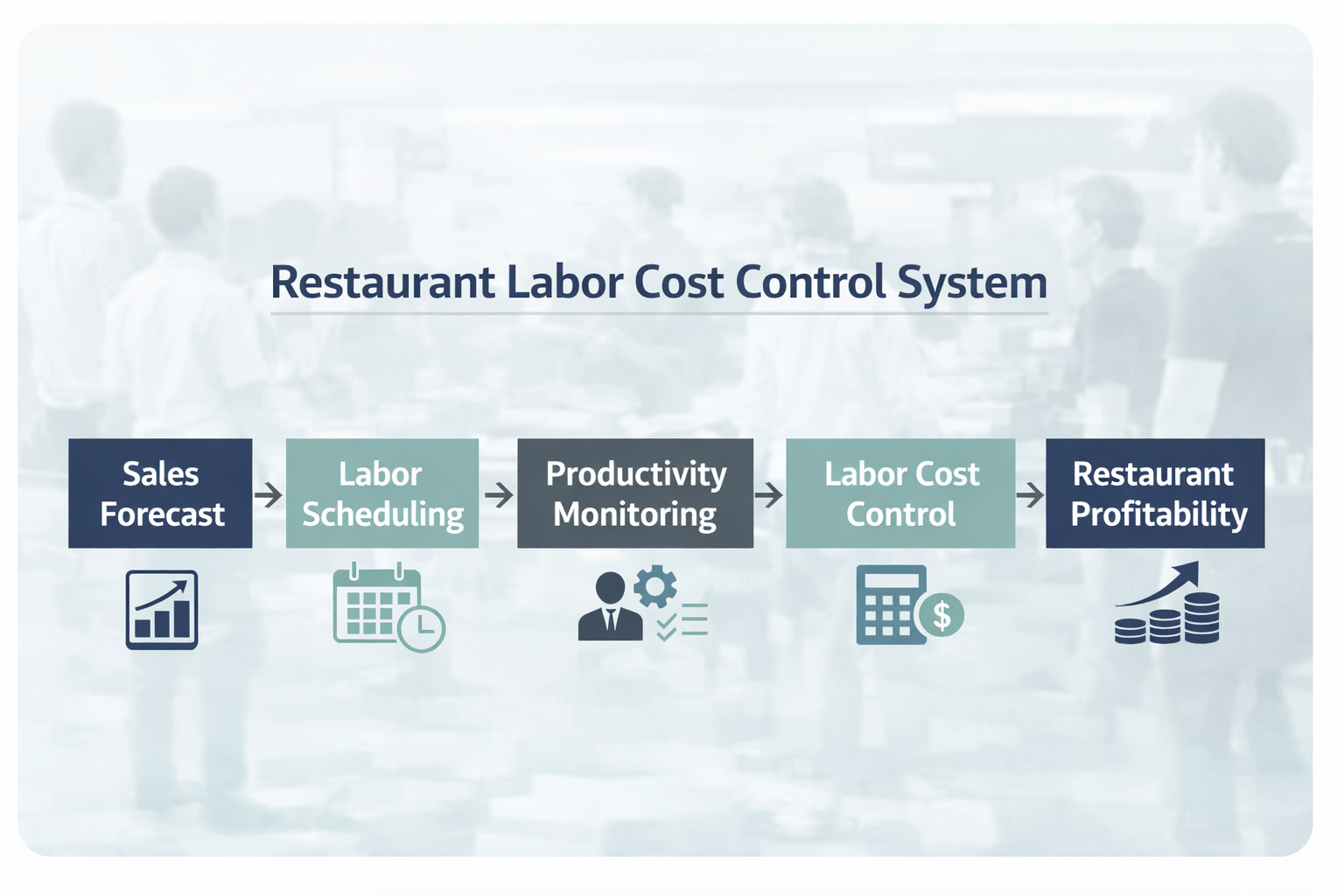
Restaurant labor cost control is one of the most important operational systems in the restaurant industry. Because labor is one of the two components of prime cost, controlling payroll expenses is essential for maintaining stable restaurant profitability.
Restaurants operate with narrow margins, which means that inefficient scheduling, poor operational systems, or unnecessary staffing can quickly reduce profit. Therefore, successful operators treat restaurant labor cost control as a structured management system rather than a simple scheduling task.
When labor systems are well designed, restaurants improve productivity, maintain service quality, and stabilize financial performance.
What Restaurant Labor Cost Control Actually Means
Restaurant labor cost control refers to the operational processes used to manage payroll expenses, staffing levels, and employee productivity. Labor cost includes several components:
- Hourly wages
- Management salaries
- Payroll taxes
- Employee benefits
- Overtime payments
Because labor is such a large operational expense, restaurants must monitor staffing efficiency carefully.
Restaurant Labor Cost Benchmarks
| Restaurant Type | Typical Labor Cost |
|---|---|
| Quick Service | 25% – 30% |
| Fast Casual | 25% – 32% |
| Full Service | 30% – 35% |
| Fine Dining | 30% – 38% |
These ranges provide general guidance, but each restaurant must evaluate labor performance based on its operational structure.
Restaurant Labor Cost Control and Prime Cost
Labor cost becomes particularly important when combined with food cost. Together, these expenses form prime cost.
Understanding this relationship helps operators manage financial performance more effectively. You can explore this concept in detail in the guide to restaurant prime cost control or calculate your own numbers using the restaurant prime cost calculator.
Restaurant Labor Scheduling Systems
Labor scheduling systems help restaurants match staffing levels with expected demand. Without proper scheduling, restaurants often overstaff slow periods or understaff busy services.
Effective scheduling systems consider:
- Historical sales data
- Reservations
- Seasonal demand
- Local events
- Day-of-week traffic patterns
Clock-In and Clock-Out Control
One common payroll leak occurs when employees clock in too early before their scheduled shift. Even small amounts of extra time accumulate across a large team.
Many restaurants implement time-clock policies that only allow employees to clock in within five minutes of their scheduled shift. Preventing early clock-ins helps reduce unnecessary payroll expenses.
Kitchen Labor Efficiency
Kitchen production systems strongly influence restaurant labor cost control. Inefficient prep processes, poorly organized stations, and inconsistent procedures require additional labor.
Restaurants improve kitchen labor efficiency by implementing structured operational systems such as:
- Prep planning
- Recipe standardization
- Inventory systems
- Station organization
For example, inventory management systems improve ingredient availability and production planning. Learn more in the guide to restaurant inventory management.
Menu Design and Labor Efficiency
Menu design also affects labor performance. Large menus often increase preparation complexity and require more staff to execute properly.
Restaurants that focus on efficient menu engineering can reduce unnecessary labor requirements while maintaining profitability. Simplified menus, shared ingredients, and efficient production systems improve both kitchen speed and staffing efficiency.
You can explore these strategies further in the article on restaurant menu engineering.
Restaurant Labor Cost Control Strategies
Effective restaurant labor cost control requires operational discipline. Instead of reacting to payroll reports after problems occur, operators should implement systems that actively manage staffing efficiency.
- Sales-based scheduling
- Monitoring sales per labor hour
- Cross-training employees
- Reducing unnecessary overtime
- Improving kitchen workflow
Apprenticeships and Government Programs That Reduce Restaurant Labor Cost
Another often overlooked strategy in restaurant labor cost control is the use of apprenticeship programs and government-supported employment initiatives. Many restaurant operators focus exclusively on scheduling efficiency or productivity metrics, but labor structure can also be optimized through workforce development programs.
In many regions, culinary apprenticeships allow restaurants to hire trainees who are completing formal culinary education or professional training programs. These apprentices receive structured workplace training while earning a lower wage compared with fully qualified cooks. As a result, restaurants can maintain productive kitchen operations while controlling payroll expenses.
Although apprentices require mentorship and training, they often provide strong long-term value. Restaurants benefit from motivated employees who are actively developing their skills while contributing to daily production tasks. Over time, this approach helps restaurants build internal talent while maintaining efficient labor costs.
Government employment programs can also play an important role in labor cost management. Municipal, provincial, and federal governments frequently offer wage-support programs designed to encourage businesses to hire and train workers.
These programs may include:
- Apprenticeship wage subsidies
- Hospitality training grants
- Employment programs for new workers
- Hiring incentives for workforce development
- Training support for culinary education programs
When restaurants participate in these programs, a portion of employee wages may be subsidized by government funding. This effectively reduces payroll expenses while still allowing operators to maintain adequate staffing levels.
Because program availability varies by region, restaurant owners should review opportunities provided by their local municipal, provincial, and federal governments. Workforce development agencies, culinary schools, and hospitality associations often maintain updated information about available funding programs.
When integrated into a broader operational framework such as restaurant systems and operations, apprenticeship programs and wage-support initiatives can significantly improve labor efficiency while helping restaurants build stronger teams.
Strategic Takeaway
Restaurants rarely struggle because of effort. Instead, operational structure often determines long-term profitability.
Within the broader framework of restaurant systems and operations, labor management becomes a strategic system that stabilizes prime cost and improves operational performance.
Restaurant operators who implement structured labor cost control systems gain better visibility into payroll expenses and maintain more predictable financial results.
Frequently Asked Questions
What is restaurant labor cost control?
Restaurant labor cost control refers to the systems used to manage staffing levels, scheduling efficiency, and payroll expenses.
What percentage should restaurant labor cost be?
Most restaurants operate between 25% and 35% labor cost depending on service model.
How does labor cost affect restaurant prime cost?
Labor cost combined with food cost forms prime cost. You can calculate this using the prime cost calculator.
How can restaurants reduce labor cost?
Restaurants reduce labor cost through scheduling systems, productivity monitoring, menu engineering, and operational procedures.
What role does inventory management play in labor efficiency?
Inventory planning improves kitchen preparation efficiency and reduces unnecessary labor. Learn more in the restaurant inventory management guide.
How does menu design influence labor cost?
Efficient menus reduce kitchen complexity and allow restaurants to operate with fewer staff. This is a key concept in menu engineering.
Where can restaurant owners learn more about restaurant systems?
Restaurant operators interested in improving operational strategy can explore training such as the Restaurant Business Planning course.
Get Practical Restaurant Systems Insights
Learn how operational systems, prime cost control, and structured workflows create stable restaurant performance.