
Michelin-standard restaurant consulting is not about chasing luxury, trends, or promises. Instead, it focuses on building restaurants where ingredient quality, culinary identity, and technical execution come together with operational discipline to create a coherent dining experience.
Michelin recognition ultimately begins with the food itself. Product integrity, cooking accuracy, and flavor balance remain the foundation. However, these elements only become visible when a restaurant is able to execute them consistently, service after service.
Therefore, this consulting approach focuses on the systems, structure, and clarity that allow restaurants to perform at a high level over time rather than relying on occasional inspiration.
Professional Perspective
My perspective on Michelin-level execution is informed in part by my experience as Executive Chef within a five-star palace hotel environment on the French Riviera.
During that time, I worked at Hotel Cap Estel , a luxury property known for its refined hospitality and demanding culinary standards.
In that environment, excellence extended far beyond cooking alone. Ingredient sourcing, technical precision, dining room coordination, and service rhythm operated within a culture where consistency, discipline, and attention to detail were fundamental.
Professional Background
- Executive Chef experience within a five-star palace hotel environment on the French Riviera
- Training influenced by classical French gastronomy and contemporary culinary execution
- Strong understanding of the relationship between kitchen operations and dining room service
- Wine education including WSET coursework and exposure to professional wine service standards
- Worldchefs Certified Judge with experience evaluating culinary performance in international competitions
- Restaurant consultant specializing in operational systems, execution discipline, and performance improvement
What Michelin Inspectors Actually Evaluate
Michelin inspectors apply remarkably consistent evaluation criteria worldwide. Regardless of cuisine, country, or restaurant format, the assessment always begins with the food itself.
Very few restaurants ultimately receive Michelin recognition. Nevertheless, restaurants that align with these standards often develop stronger culinary identity, operational discipline, and long-term reputation.
Ingredient Quality
First and foremost, product sourcing, seasonality, and freshness remain fundamental. Even the most refined technique cannot compensate for mediocre ingredients.
Technical Execution
Furthermore, cooking accuracy, flavor balance, temperature control, and plating discipline all contribute to the technical mastery inspectors expect.
Culinary Identity
Equally important, Michelin-recognized restaurants express a clear culinary point of view. As a result, the cuisine reflects a coherent vision rather than a collection of disconnected ideas.
Consistency
Above all, consistency remains decisive. Dishes must perform at the same level across services, across weeks, and across seasons.
Value Within the Category
Finally, Michelin evaluates value relative to the restaurant’s positioning. Consequently, excellence can appear in fine dining or very simple formats — as long as the experience remains coherent.
For a detailed explanation of how Michelin inspectors evaluate restaurants, you can read The Michelin Star Award Process Explained .
Michelin Star Classification
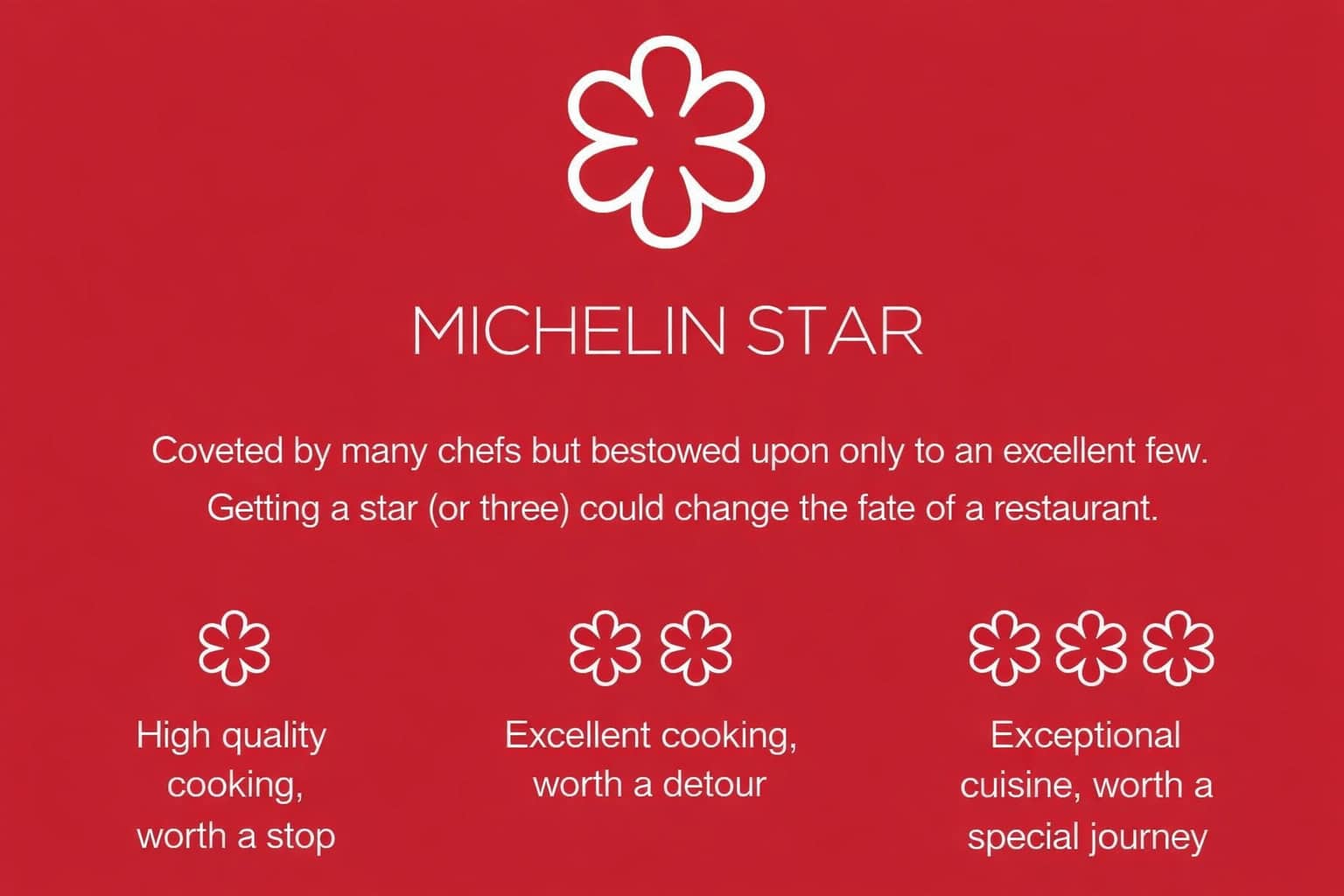
The Michelin Guide uses a simple but highly respected classification system based primarily on the quality of the cuisine. One star recognizes high-quality cooking worth a stop. Two stars indicate excellent cooking worth a detour. Three stars represent exceptional cuisine worth a special journey.
For a deeper explanation of how Michelin inspectors evaluate restaurants, read The Michelin Star Award Process Explained .
The Restaurant Ecosystem: More Than the Plate
While the first Michelin star is strongly driven by the food, inspectors ultimately experience the restaurant as a complete environment.
Supporting the Cuisine
Menu structure, beverage programs, service tone, dining room atmosphere, and spatial flow should therefore support the cuisine rather than compete with it.
Common Misconceptions
Contrary to popular belief, Michelin recognition does not require luxury décor or theatrical presentation. Instead, inspectors consistently prioritize ingredient quality, technical mastery, and the personality of the cuisine.
What Michelin-Standard Consulting Focuses On
Rather than pursuing awards directly, this consulting work focuses on strengthening the operational foundations that allow restaurants to operate at a Michelin-level standard.
- Clarifying culinary identity and menu architecture
- Strengthening ingredient sourcing and product standards
- Improving kitchen workflow and execution discipline
- Aligning front-of-house service with the cuisine
- Establishing consistency protocols across services
- Supporting operational clarity and leadership structure
Is Your Restaurant Ready for Michelin-Level Execution?
Restaurants that successfully reach Michelin-level performance typically demonstrate several structural characteristics.
- Strong respect for ingredient quality and seasonality
- A clear culinary identity rather than trend-driven menus
- Kitchen systems supporting precise execution
- Front-of-house teams aligned with the cuisine
- Leadership capable of maintaining discipline across services
- A culture where refinement and improvement are constant
A Note on Michelin Recognition
It is important to understand that no consultant, chef, or restaurant professional can promise or guarantee Michelin recognition. Michelin stars are awarded independently by inspectors, and the process remains confidential and outside the control of restaurants themselves.
What consulting can do, however, is help restaurants strengthen the elements that Michelin inspectors consistently evaluate: ingredient quality, technical execution, culinary identity, consistency, and the overall coherence of the dining experience.
The objective is therefore not to chase an award, but to build a restaurant capable of operating at a level where recognition becomes possible.
Restaurants that operate at this level rarely rely on inspiration alone. Instead, they rely on structure, discipline, and teams capable of executing excellence service after service.
If you are considering Michelin-level alignment and want an honest assessment of where your restaurant currently stands, the next step is a private conversation.