
Restaurant Scheduling Systems: How Smart Scheduling Controls Labor Cost
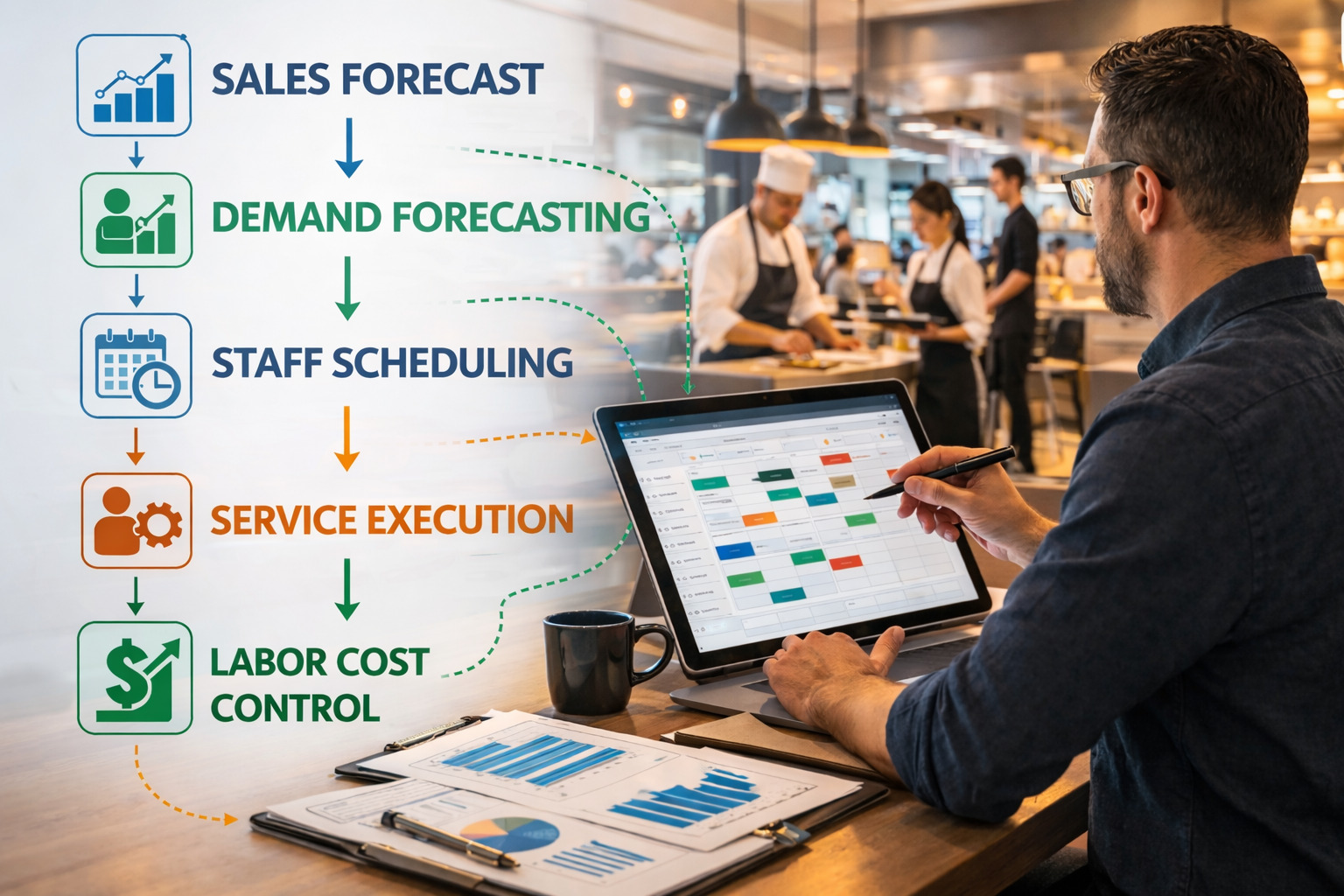
Restaurant scheduling systems are one of the most important operational tools for controlling labor cost. Because labor represents one of the largest expenses in restaurant operations, inefficient scheduling quickly increases payroll costs and weakens profitability.
Successful restaurants therefore avoid reactive scheduling. Instead, they rely on structured scheduling systems built around sales forecasting, service patterns, and operational efficiency.
When these systems are implemented correctly, restaurants improve productivity, reduce unnecessary payroll expenses, and stabilize operational performance.
Restaurant scheduling systems are structured operational processes used to plan employee shifts based on predicted sales volume, guest demand, and service patterns. By aligning staffing levels with expected demand, scheduling systems help restaurants control labor cost, maintain service standards, and improve overall operational efficiency.
Why Restaurant Scheduling Systems Matter
Labor cost represents a major portion of restaurant operating expenses. Consequently, poorly managed scheduling typically creates two operational problems:
- Overstaffing during slow periods
- Understaffing during peak service hours
Overstaffing increases payroll expenses and reduces productivity. Conversely, understaffing weakens service quality and damages the guest experience.
Structured scheduling systems therefore allow operators to align staffing levels with expected demand.
Sales Forecasting and Labor Planning
Restaurant scheduling systems should begin with sales forecasting. Historical sales data allows operators to anticipate how busy the restaurant will be during specific service periods.
By reviewing past performance, managers can identify patterns such as:
- Peak service hours
- Seasonal demand changes
- Weekend traffic increases
- Special events that drive demand
These insights allow managers to plan staffing levels more accurately and avoid unnecessary payroll waste.
Building Efficient Restaurant Shifts
Effective scheduling divides the operational day into multiple phases rather than assigning identical shifts to every employee.
Typical shift structures include:
- Preparation shifts
- Lunch service shifts
- Dinner service shifts
- Closing shifts
As a result, restaurants can match staffing levels with actual operational needs throughout the day.
Preventing Overstaffing and Idle Labor
Idle labor is one of the most common payroll leaks in restaurant operations. Employees who arrive too early or remain scheduled after service slows down generate unnecessary labor cost.
For this reason, professional operators monitor productivity indicators such as:
- Sales per labor hour
- Table turnover rate
- Guest volume during service periods
Using these indicators allows managers to adjust schedules and maintain efficient staffing levels.
Key Labor Scheduling Metrics Restaurant Operators Should Track
Modern restaurant scheduling systems rely on measurable performance indicators rather than intuition alone.
Although labor structures vary between regions, several operational benchmarks remain consistent across the industry.
Typical Labor Benchmarks by Restaurant Type
| Restaurant Type | Typical Labor Cost % | Sales per Labor Hour | Operational Characteristics |
|---|---|---|---|
| Quick-Service / Fast Casual | 20% – 30% | $80 – $120 | Highly standardized production with limited table service. |
| Casual Dining | 25% – 35% | $60 – $90 | Moderate service levels with larger teams during peak periods. |
| Full-Service Restaurant | 30% – 40% | $50 – $80 | Higher staffing requirements due to table service. |
| Fine Dining | 35% – 45% | $40 – $70 | High-touch service model with extensive front-of-house staffing. |
Restaurant Scheduling Systems and Labor Cost Control
Scheduling systems directly support restaurant labor cost control. Because staffing levels determine payroll expense, scheduling decisions directly affect profitability.
Furthermore, scheduling systems are part of the broader framework of restaurant systems and operations. When these systems work together, restaurants operate more efficiently and maintain stable profit margins.
Strategic Takeaway
Restaurant environments change rapidly throughout the day. Without structured scheduling systems, managers often rely on guesswork, which leads to inconsistent labor performance.
However, forecasting-based scheduling allows restaurants to maintain efficient staffing levels, reduce payroll waste, and protect profitability.
Ultimately, effective scheduling supports both operational stability and strong guest service.
Frequently Asked Questions
What are restaurant scheduling systems?
Restaurant scheduling systems are structured processes used to plan employee shifts based on predicted demand and operational requirements.
Why is scheduling important in restaurants?
Scheduling ensures that restaurants maintain the correct staffing levels during both busy and slow periods.
How does scheduling affect restaurant labor cost?
Scheduling determines how many employees work during each service period. Efficient scheduling therefore improves restaurant labor cost control.
How does scheduling connect to restaurant systems?
Scheduling is part of the broader framework of restaurant systems and operations that drive operational efficiency.
Get Practical Restaurant Profitability Insights
Receive practical insights on restaurant profitability, labor cost control, scheduling systems, menu engineering, and operational performance.
Or schedule a direct meeting with Chef Eric.
Book a Free Restaurant ConsultationRelated Restaurant Systems Articles
Restaurant labor cost is only one component of the broader restaurant systems framework. The following guides explore additional operational systems that affect profitability.