
Restaurant Labor Scheduling Strategy: How to Control Labor Cost Without Cutting Service
Restaurant labor scheduling is one of the most powerful operational tools for controlling labor cost while maintaining excellent service. Many operators assume labor problems come from high wages or too many employees. In reality, most labor cost problems come from poor scheduling decisions.
Most restaurants don’t struggle because labor is expensive. They struggle because labor is scheduled without reference to revenue.
Effective scheduling connects three core restaurant performance metrics:
Understanding Sales Per Labor Hour (SPLH)
Sales Per Labor Hour measures how much revenue a restaurant generates for every labor hour scheduled. It is one of the most important productivity metrics used in restaurant operations.
For example, if a restaurant generates $8,000 in sales using 100 labor hours, the SPLH equals $80. This metric helps managers determine how many labor hours the restaurant can support.
The Labor Scheduling Formula
Example:
- Projected sales: $8,000
- Target SPLH: $80
Maximum labor hours allowed = 100 hours.
Sales Forecasting Drives Labor Scheduling
Accurate labor scheduling begins with accurate sales forecasting. Modern POS systems allow restaurants to predict demand patterns using historical data.
- Sales by day of week
- Seasonality
- Local events
- Weather
- Reservations
Build Schedules by Daypart and Role
Restaurants rarely operate at the same volume all day. Scheduling must adjust staffing levels according to operational periods.
| Daypart | Typical Staffing | Role Focus | Cost Logic |
|---|---|---|---|
| Opening Prep | Small kitchen team | Prep cooks / apprentices | Lower wage roles |
| Lunch | Moderate FOH and BOH | Servers / line cooks | Balanced labor structure |
| Dinner | Full brigade | Senior staff | Higher wages justified by revenue |
| Closing | Reduced team | Support roles | Lower wage tasks |
Skill-Based Scheduling (Avoid Paying High Wages for Low Tasks)
Another common scheduling mistake is assigning high-wage employees to low-value tasks.
For example:
- A chef de rang performing cleaning tasks
- A senior line cook doing basic prep
- A bartender doing host duties
Organizing schedules by skill level and hourly wage allows restaurants to maintain productivity without inflating labor cost.
Apprenticeships and government training programs can also reduce labor pressure while building long-term staff development.
Opening Hours vs Profitability
Restaurants sometimes remain open during periods where sales cannot support labor and food costs. This can silently destroy profitability.
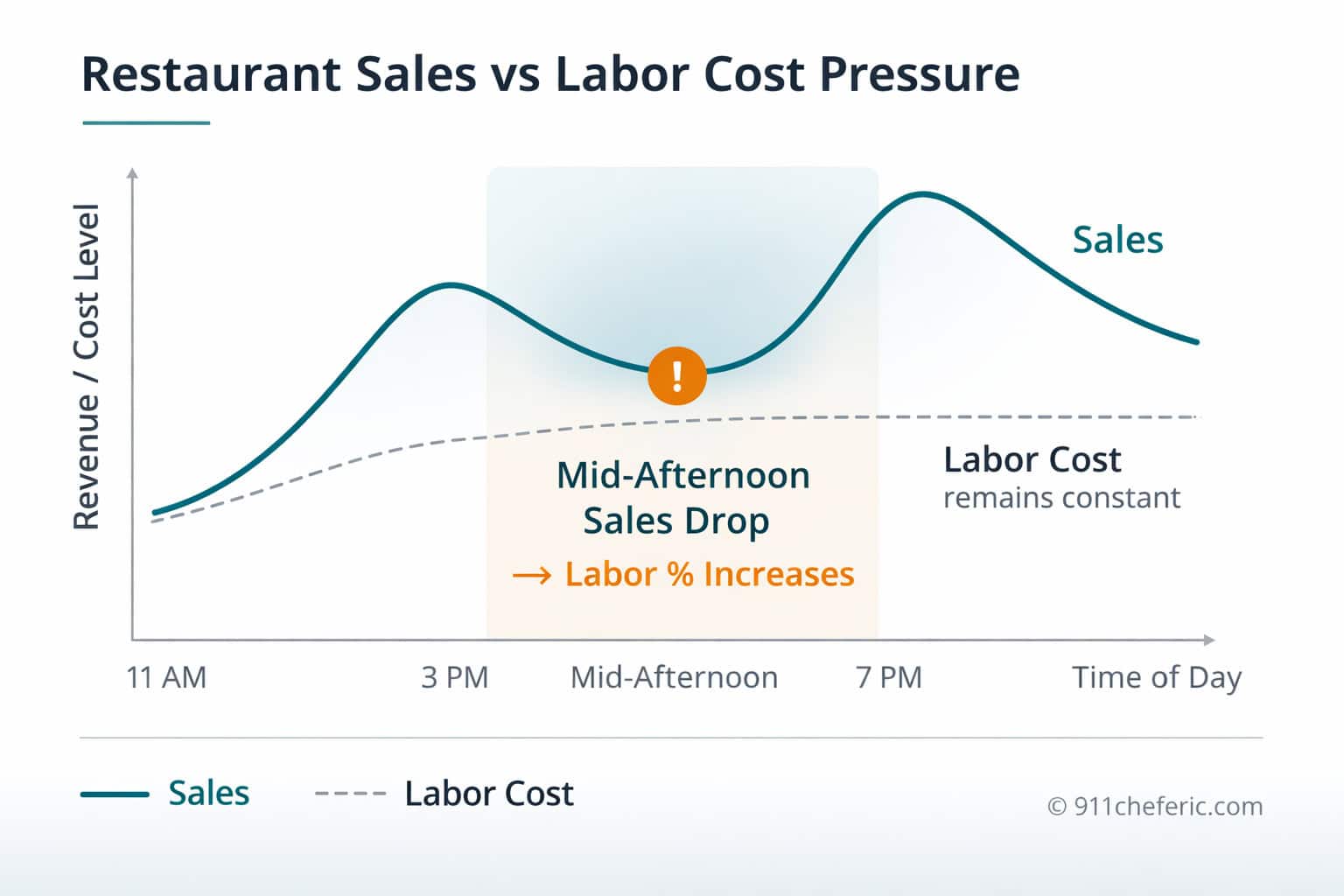
The graph above illustrates how restaurant sales fluctuate throughout the day while staffing levels often remain relatively stable. When revenue drops during slower periods such as mid-afternoon but labor hours remain constant, the labor cost percentage increases rapidly and can reduce profitability.
Technology Is Changing Restaurant Staffing
Modern restaurants increasingly use technology to reduce front-of-house staffing requirements.
- QR code ordering
- Mobile ordering
- Self-service kiosks
- Automated pickup lockers
- Curbside ordering
In high-density cities such as Tokyo, Shanghai, and Toronto, some quick-service restaurants operate with minimal or no front-of-house employees.
Labor Scheduling Around the World
| Region | Labor Structure | Scheduling Focus |
|---|---|---|
| North America | High wages | Productivity driven |
| Europe | Strong labor regulation | Compliance and structured shifts |
| Asia | High service expectations | Technology assisted service |
Frequently Asked Questions
Get Practical Restaurant Profitability Insights
Receive practical insights on restaurant profitability, labor cost control, scheduling systems, menu engineering, and operational performance.
Or schedule a direct meeting with Chef Eric.
Book a Free Restaurant Consultation