
Restaurant Labor Cost %: The Most Misunderstood Metric in Restaurants
Restaurant labor cost percentage is one of the most critical financial metrics in restaurant operations. Many restaurants operate with labor costs between 30% and 40% without realizing that even a small increase can eliminate the entire profit margin. Understanding how labor cost percentage works allows operators to build sustainable staffing systems and protect profitability.
- Labor Cost % controls staffing cost
- Sales Per Labor Hour (SPLH) measures labor productivity
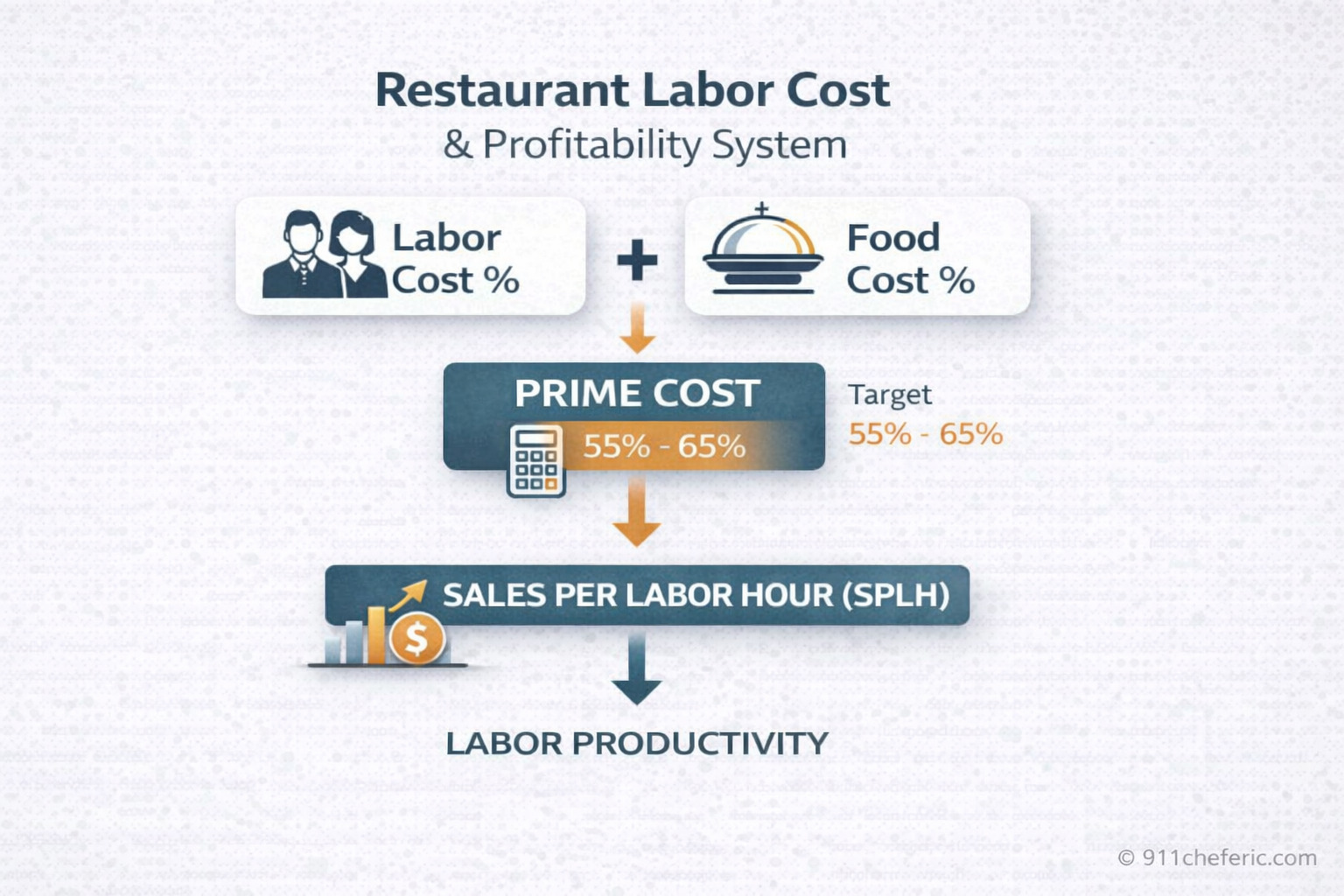
- Prime Cost = Food Cost + Labor Cost determines profitability
What Is Restaurant Labor Cost %?
Understanding Restaurant Labor Expenses
Labor cost percentage measures how much of total revenue is spent on wages, salaries, payroll taxes, and employee benefits.
If a restaurant generates $100,000 in revenue and spends $30,000 on labor, the labor cost percentage equals 30%.
Many restaurants focus on food cost while ignoring labor cost. In reality, labor is often the fastest way for profit to disappear.
The Restaurant Budget Is Only 100%
Understanding Prime Cost Structure
Every restaurant operates inside a fixed financial structure where all expenses must fit within 100% of revenue.
| Expense Category | Typical Range |
|---|---|
| Food Cost | 28% – 32% |
| Labor Cost | 25% – 35% |
| Occupancy (Rent) | 6% – 10% |
| Operating Expenses | 15% – 20% |
| Profit Margin | 5% – 10% |
If rent increases, another category must decrease. Consequently, in many restaurants that pressure falls directly on labor cost.
Recommended Labor Cost % by Restaurant Type
Typical Labor Benchmarks
| Restaurant Type | Recommended Labor Cost % |
|---|---|
| Quick Service Restaurants | 20% – 25% |
| Fast Casual Restaurants | 22% – 28% |
| Casual Dining Restaurants | 25% – 30% |
| Full Service Restaurants | 30% – 35% |
| Fine Dining Restaurants | 35% or higher |
Why Restaurants Miscalculate Labor Cost
Common Operational Mistakes
- Manager salaries excluded
- Payroll taxes not included
- Benefits ignored
- Overtime not tracked
- Poor scheduling systems
Additionally, many restaurants underestimate prep labor, cleaning labor, and management inefficiencies that quietly increase staffing costs.
Labor Cost vs Labor Productivity
Why Productivity Matters
Labor cost percentage should always be evaluated alongside productivity metrics.
This metric measures how productive employees are while they are working.
| Hour | Sales | Staff | Observation |
|---|---|---|---|
| 5 PM | $2,500 | 8 | Efficient staffing |
| 8 PM | $1,200 | 8 | Overstaffed |
| 10 PM | $400 | 6 | Labor cost too high |
Labor Cost Red Flags
Warning Signs Restaurant Operators Should Monitor
- Labor consistently above 35%
- Low sales per labor hour
- Overstaffing during slow periods
- Managers covering operational inefficiencies
- Excessive prep labor
Labor Cost and Prime Cost
How Prime Cost Determines Profitability
Prime cost should generally remain between 55% and 65% of revenue. Therefore, labor control and food cost management must work together rather than independently.
Learn Restaurant Financial Systems
Restaurant Operations Training and Education
Restaurant profitability depends on understanding financial systems such as labor cost, food cost, prime cost, and operational productivity.
The Online Culinary School teaches structured restaurant systems including cost control, menu engineering, and operational management.
Entrepreneurs planning a new restaurant can learn how to structure labor budgets, menu pricing, and financial projections in the Restaurant Business Planning Online Course.
Frequently Asked Questions
Need Help Improving Restaurant Profitability?
We help restaurants improve labor efficiency, scheduling systems, operational consistency, menu performance, and profitability through structured restaurant systems and operational consulting.
Available for restaurants across Canada.