
Restaurant Par Level System: How to Control Ordering and Protect Your Profit
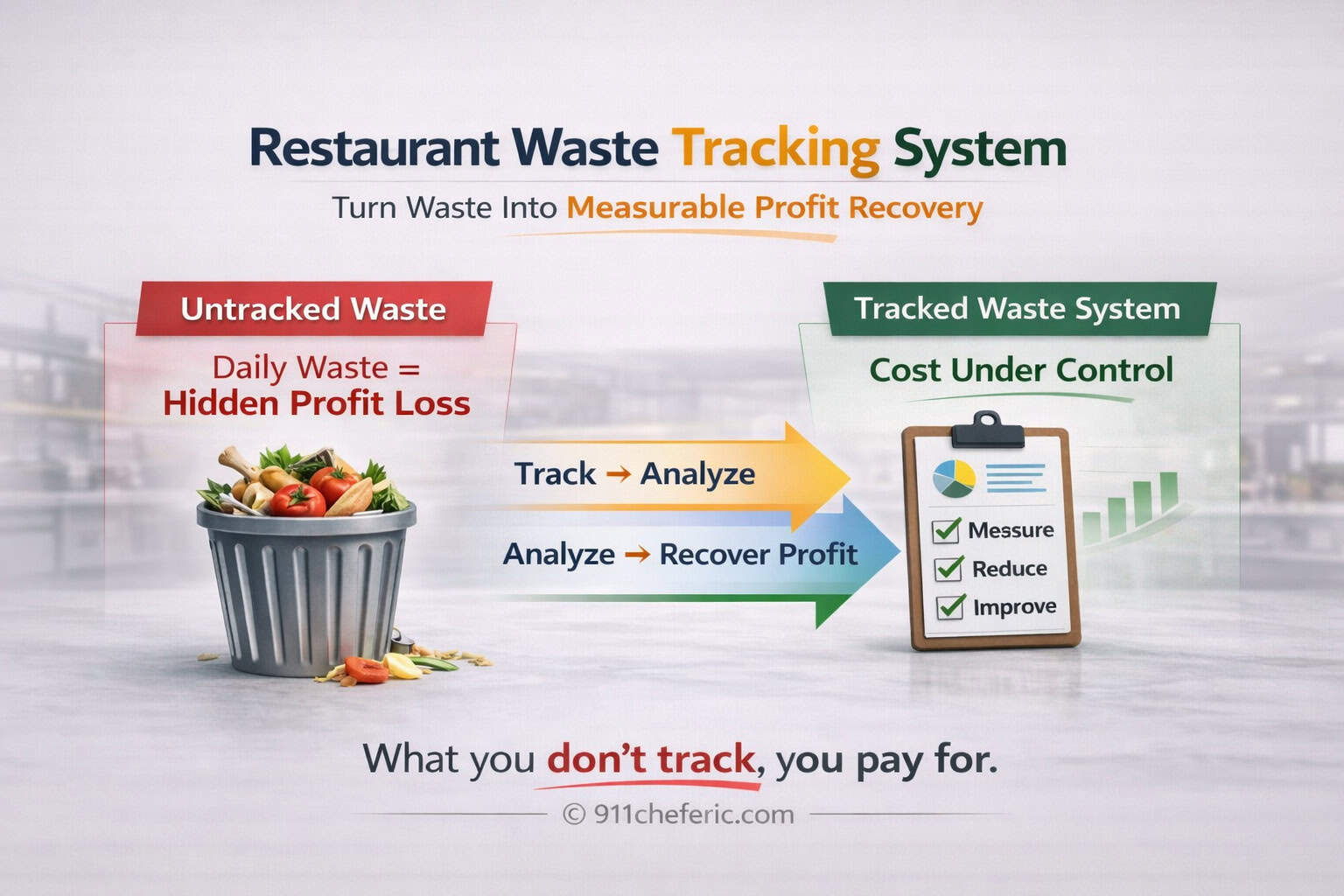
Restaurant par level system showing how structured ordering stabilizes inventory, reduces waste, and protects profit margins.
Restaurant par level system implementation determines whether your kitchen operates with control or constant fluctuation.
If your food cost fluctuates, inventory feels inconsistent, or your team constantly “guesses” what to order, the problem is not purchasing — it is the absence of a system.
At a financial level, ordering decisions directly impact your restaurant prime cost. When ordering becomes inconsistent, food cost increases, waste accumulates, and margins shrink.
In most operations, ordering is reactive. However, without structure, this creates instability across inventory, production, and cost control.
What a Restaurant Par Level System Actually Does
A par level system defines both minimum and maximum inventory levels for each product. As a result, it creates a structured framework for ordering decisions.
Instead of guessing, operators follow:
– Minimum level (reorder point)
– Maximum level (capacity limit)
– Usage rate (based on real sales)
Therefore, ordering becomes predictable, consistent, and aligned with actual demand.
This makes par levels the ordering control layer of your restaurant control system.
Why Most Restaurants Lose Control of Ordering
In practice, ordering problems develop gradually rather than suddenly.
For example, teams often over-order “to be safe.” Consequently, inventory builds up and increases spoilage risk. At the same time, under-ordering creates stockouts and disrupts service.
Because these patterns repeat daily, they become normalized. However, over time, they create unstable food cost and inconsistent performance.
As a result, this instability directly impacts your theoretical vs actual food cost, where poor ordering increases variance.
Connection to Inventory and Waste Systems
A par level system does not operate independently. Instead, it integrates directly with your restaurant inventory management system.
Inventory measures what you have. Par levels determine what you should order.
At the same time, ordering errors lead directly to waste. Therefore, par levels must align with a restaurant waste tracking system.
Inventory measures. Par levels control. Waste tracking validates.
How Par Levels Protect Prime Cost
Because ordering drives inventory levels, it directly influences food cost performance.
When par levels are followed consistently:
– Overstock decreases
– Waste is reduced
– Purchasing stabilizes
– Food cost becomes predictable
As a result, your restaurant prime cost remains controlled and stable.
System Chain: Where Par Levels Fit
Each system feeds the next. Therefore, when par levels fail, the entire chain becomes unstable.
Execution: What Actually Makes It Work
Par levels only work when execution is consistent.
Teams must:
– Count inventory accurately
– Follow ordering limits strictly
– Adjust based on real sales data
– Avoid emotional or “safety” ordering
Otherwise, the system breaks and returns to guesswork.
Common Failures — And How to Fix Them
Many operators implement par levels but fail to maintain them.
Typical failures include:
– Outdated par levels
– Inconsistent inventory counts
– Ignoring usage trends
– Overriding the system under pressure
To correct this, operators must review par levels weekly and align them with real sales and waste data.
Strategic Takeaway
Ordering is not a purchasing activity. Instead, it is a financial control system.
When ordering is structured, operations stabilize. However, when ordering is inconsistent, cost becomes unpredictable.
Ultimately, controlling your par level system means controlling your profitability.
If you don’t control ordering, you don’t control your profit.
Frequently Asked Questions
What is a restaurant par level system?
A restaurant par level system defines minimum and maximum inventory levels to control ordering and maintain operational stability. It connects directly to inventory management.
How do par levels reduce food cost?
Par levels reduce food cost by preventing over-ordering and reducing waste, which directly stabilizes restaurant prime cost.
How often should par levels be updated?
Par levels should be reviewed weekly using sales data, inventory counts, and waste tracking.
How does this connect to profitability?
Par levels control ordering, which directly impacts food cost, waste, and overall profitability across your restaurant control system.
Improve Inventory Control and Restaurant Profitability
Par level systems improve inventory stability, reduce waste, strengthen ordering discipline, and protect restaurant profitability.
Work with a restaurant consultant in Vancouver BC to improve inventory systems, ordering controls, food cost management, and operational performance.