
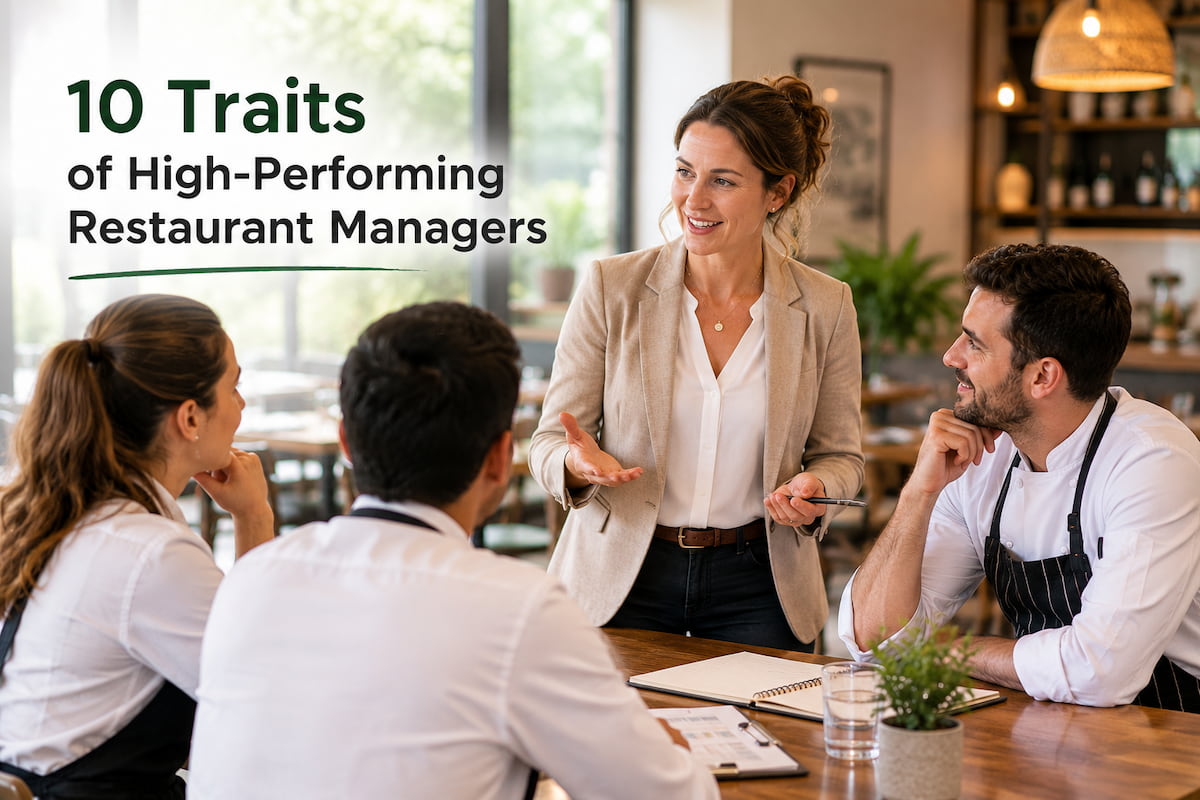
10 Traits of High-Performing Restaurant Managers
The difference between average and exceptional restaurant managers isn’t experience alone. High-performing managers create accountability, improve culture, reduce turnover, strengthen profitability, and help restaurants operate at a consistently higher level.
Table of Contents
Why Restaurant Management Matters More Than Ever
Restaurant managers directly influence profitability, employee retention, guest satisfaction, labor performance, food cost control, and workplace culture. While menus and marketing are important, daily management often determines whether a restaurant thrives or struggles.
Retention
Strong managers reduce costly employee turnover.
Profitability
Better decisions improve food and labor cost control.
Guest Experience
Consistent leadership improves service quality.
Culture
Leadership shapes workplace performance.
Restaurant success is rarely determined by recipes alone. While food quality matters, the ability to lead people, manage systems, solve problems, and maintain standards often separates thriving restaurants from struggling ones.
Whether managing a quick-service restaurant, casual dining operation, hotel foodservice department, or fine dining establishment, successful managers share common leadership traits that consistently drive better results.
Here are the 10 traits that define high-performing restaurant managers.
Restaurant Manager Leadership Assessment
Evaluate your leadership effectiveness across 10 critical restaurant management competencies. Rate each statement from:
1. During busy service periods, I consistently model the behavior and standards I expect from my team.
2. My team clearly understands expectations, priorities, and performance standards.
3. I address performance issues promptly and consistently.
4. I understand and actively manage labor cost, food cost, and prime cost targets.
5. I actively coach team members and help develop future leaders.
6. I remain calm and solution-focused during stressful operational situations.
7. I make timely decisions that keep the operation moving forward.
8. I regularly review systems, procedures, and performance metrics to improve operations.
9. I actively contribute to a positive, accountable workplace culture.
10. I think beyond daily operations and focus on long-term business performance.
At a Glance: The 10 Traits
| Trait | Primary Impact | Business Result |
|---|---|---|
| Lead by Example | Accountability | Consistency |
| Communication | Team Alignment | Fewer Mistakes |
| Accountability | Performance | Execution |
| Financial Awareness | Cost Control | Profitability |
| Team Development | Retention | Growth |
| Composure | Service Quality | Stability |
| Decision Making | Problem Solving | Efficiency |
| Continuous Improvement | Systems | Growth |
| Culture Building | Engagement | Retention |
| Ownership Mentality | Leadership | Results |
The 10 Traits of High-Performing Restaurant Managers
1. They Lead by Example
Great managers understand that employees follow actions more closely than words. They consistently demonstrate professionalism, accountability, reliability, and a positive attitude.
2. They Communicate Clearly and Consistently
Strong communication reduces confusion, prevents mistakes, and ensures everyone understands expectations and priorities.
3. They Hold Team Members Accountable
High-performing managers create standards and consistently follow up on expectations.
4. They Understand Restaurant Financial Performance
Successful managers understand food cost, labor cost, prime cost, menu performance, and key restaurant KPIs.
5. They Develop Their Team
They coach employees, identify future leaders, and create opportunities for growth and advancement.
6. They Stay Calm Under Pressure
Every restaurant experiences difficult shifts. Strong managers remain composed and focused on solutions.
7. They Make Decisions Quickly
Restaurant operations move fast. Delayed decisions often create larger operational issues.
8. They Focus on Continuous Improvement
Top managers regularly review systems, performance, and opportunities to improve efficiency.
9. They Build Strong Workplace Culture
Strong workplace cultures improve retention, engagement, productivity, and guest experiences.
10. They Think Like Business Owners
The best managers understand that every decision affects profitability, culture, guest experience, and long-term success.
Common Restaurant Management Mistakes
| Mistake | Impact |
|---|---|
| Poor communication | Confusion and mistakes |
| Avoiding difficult conversations | Low accountability |
| Ignoring KPIs | Reduced profitability |
| Lack of coaching | High turnover |
| Reactive management | Operational instability |
How Restaurant Owners Can Develop Better Managers
- Provide leadership training and coaching.
- Create clear expectations and performance standards.
- Review KPIs regularly.
- Invest in management development programs.
- Create growth opportunities for future leaders.
- Provide consistent feedback and accountability.
Related Resources for Restaurant Managers
Continue developing your restaurant management, leadership, operational, and profitability skills with these additional resources.
Restaurant Consulting Services
Improve operations, profitability, leadership performance, and accountability systems.
Restaurant Cost Control & Profitability
Learn strategies to reduce costs, improve margins, and strengthen financial performance.
Menu Engineering
Optimize menu performance and increase profitability through strategic menu analysis.
Restaurant Management Courses
Build leadership, management, and operational skills through professional training.
Free Restaurant Consultation
Discuss leadership challenges, profitability concerns, and operational opportunities.
Hospitality Leadership Coaching
Explore training resources designed to help managers become stronger leaders.
Final Thoughts
High-performing restaurant managers do far more than supervise staff. They improve profitability, strengthen workplace culture, reduce turnover, enhance guest experiences, and create more efficient operations.
By developing these ten traits, managers can become stronger leaders while helping restaurants achieve better operational and financial performance.
Free Download: Restaurant Manager Leadership Checklist
Looking for a practical leadership tool for restaurant managers? Download our free Restaurant Manager Leadership Checklist covering daily leadership habits, accountability systems, KPI tracking, team development, profitability monitoring, and a 90-day leadership improvement plan.
Use this checklist during manager training, performance reviews, leadership development meetings, and operational planning sessions.
Download the Free PDFNeed Help Developing Stronger Restaurant Leaders?
Whether you’re looking to improve restaurant operations, strengthen management performance, or develop leadership systems that drive results, professional guidance can accelerate progress.
Frequently Asked Questions
What is the most important trait of a restaurant manager?
Leadership is often the most important trait because it influences communication, accountability, culture, and team performance.
How can restaurant managers improve profitability?
By understanding food cost, labor cost, prime cost, menu performance, and operational efficiency.
Why is communication important in restaurant management?
Clear communication reduces mistakes, improves teamwork, and creates consistency throughout the operation.
Can leadership skills be learned?
Yes. Leadership skills can be developed through coaching, training, experience, and continuous improvement.
How do strong managers reduce employee turnover?
By creating accountability, supporting employee development, communicating effectively, and building a positive workplace culture.