
Restaurant SOP systems improve kitchen execution, workflow consistency, communication standards, staff coordination, and operational stability. Although talent remains important in hospitality, high-performing restaurants usually depend on structured systems that support execution during pressure, staffing changes, and high-volume service periods.
Consequently, restaurants operating without organized systems frequently struggle with workflow disruptions, inconsistent guest experience, communication breakdowns, and rising operational stress. In contrast, disciplined operational systems help restaurants maintain consistency, accountability, and execution quality throughout the business.
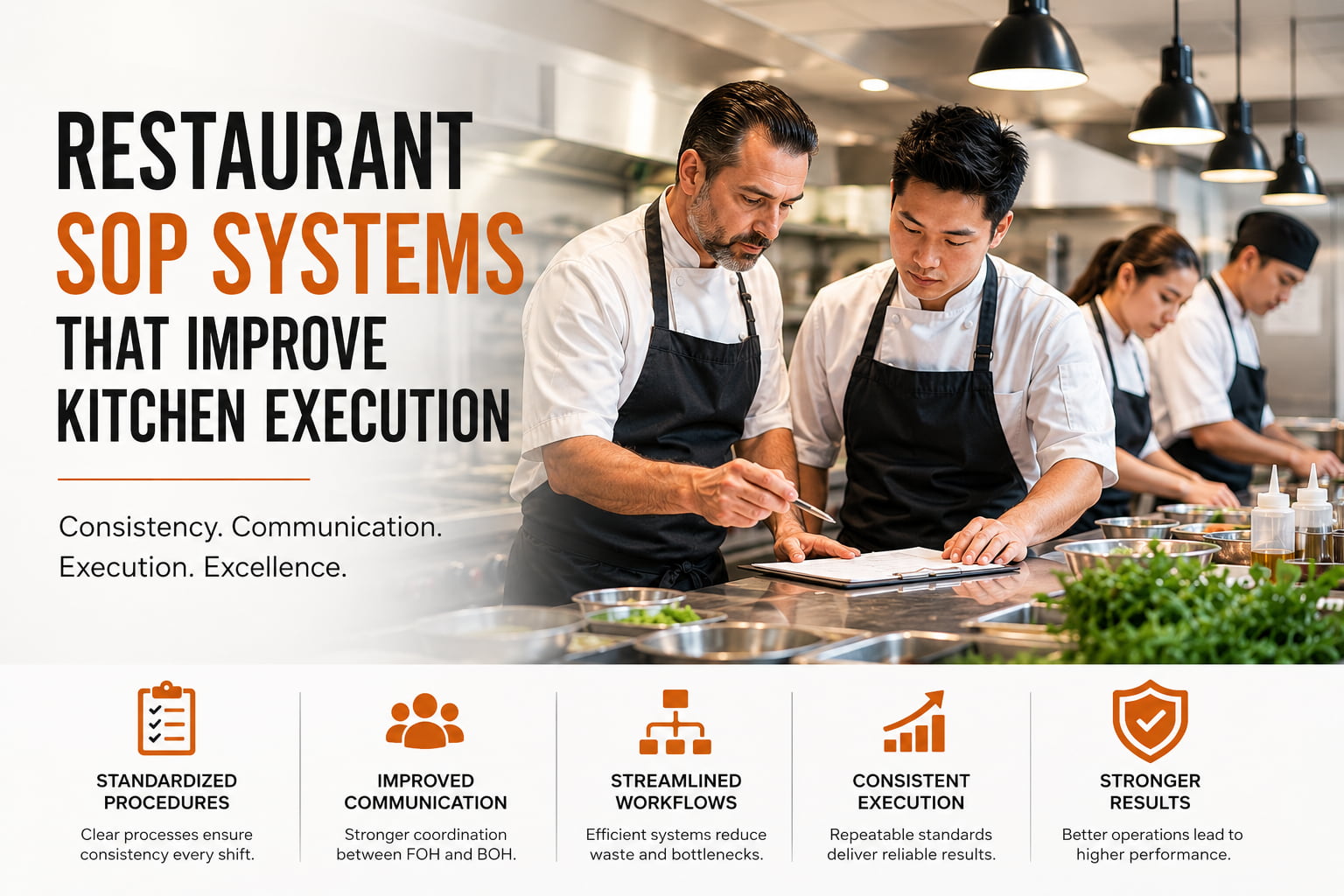
Strong restaurant systems are rarely built around talent alone. Instead, sustainable performance typically depends on operational structure, workflow discipline, communication consistency, and leadership accountability.
Why Restaurant SOP Systems Matter
Operational Consistency Creates Stability
Restaurant SOP systems create repeatable operational standards that help teams maintain execution consistency across shifts, staffing changes, and service pressure. Therefore, restaurants with structured systems often experience stronger communication, improved organization, and more reliable guest experiences.
Additionally, organized systems reduce confusion during service because team members understand expectations, workflow structure, and operational priorities clearly.
Operational Problems Often Begin With Systems
Many restaurants attempt to solve performance issues through staffing changes alone. However, inconsistent execution frequently originates from unclear operational systems, weak communication structures, or missing workflow standards.
Prep systems, station organization, and communication flow improve execution reliability.
Structured systems reduce confusion and improve accountability during service.
Restaurants maintain standards more effectively under pressure.
Kitchen Workflow and Execution Standards
Prep Systems Influence Service Performance
Strong prep systems support kitchen execution throughout service. Consequently, restaurants with poor prep organization frequently experience ticket delays, communication issues, missing mise en place, and inconsistent plating standards.
In contrast, structured prep systems help restaurants improve coordination, reduce operational friction, and maintain stronger execution consistency during busy periods.
- Station organization and workflow mapping
- Prep structure and mise en place consistency
- Communication systems between FOH and BOH
- Execution standards during peak service
- Opening and closing operational procedures
- Leadership accountability systems
Restaurants seeking stronger kitchen structure may also benefit from Kitchen Workflow Plan consulting , BOH Systems & SOP Setup , and Restaurant Training Programs .
FOH Systems and Team Communication
Service Standards Require Structure
Front-of-house execution depends heavily on communication systems, leadership coordination, and operational consistency. Therefore, restaurants without structured FOH systems often experience inconsistent guest experience standards, service delays, and communication breakdowns between departments.
Furthermore, strong operational systems improve onboarding consistency and help new employees integrate more efficiently into restaurant culture and workflow expectations.
Restaurants improving hospitality execution may also benefit from FOH Training , FOH Systems & SOP Setup , and FOH & BOH Audits .
Operational Systems and Restaurant Profitability
Structure Reduces Operational Waste
Operational inefficiency frequently creates hidden profitability issues inside restaurants. For example, workflow breakdowns, inconsistent prep systems, communication failures, and unclear accountability standards all increase operational costs over time.
As a result, restaurants with stronger systems often improve labour efficiency, execution consistency, operational stability, and guest retention simultaneously.
Operators working on operational performance may also benefit from Restaurant Optimization consulting and Systems & SOP Setup coaching .
How Michelin-Level Restaurants Use Systems
Operational Excellence Requires Discipline
Michelin-level restaurants are rarely successful because of creativity alone. Instead, they usually rely on disciplined operational systems, precise execution standards, leadership structure, communication consistency, and workflow organization that support performance every day.
Consequently, operational systems often become the foundation for restaurants pursuing elevated hospitality standards, refined execution, and long-term operational excellence.
Restaurants exploring advanced operational refinement may also benefit from the Michelin Readiness Assessment and Michelin-Standard Readiness Consulting .
Additional hospitality leadership and culinary education resources are also available through Online Culinary School .
Frequently Asked Questions
What are restaurant SOP systems?
Restaurant SOP systems are structured operational procedures designed to improve consistency, workflow organization, communication standards, execution quality, and accountability throughout restaurant operations.
Why are SOP systems important in restaurants?
Operational systems help restaurants reduce confusion, improve execution consistency, support staff training, maintain workflow organization, and improve guest experience reliability during service.
How do kitchen workflow systems improve execution?
Kitchen workflow systems improve prep coordination, communication flow, station organization, accountability, and operational discipline during busy service periods.
Can operational systems improve restaurant profitability?
Yes. Structured systems frequently reduce operational waste, communication breakdowns, labour inefficiencies, execution inconsistencies, and workflow disruptions that negatively affect profitability.
How are SOP systems connected to Michelin readiness?
Michelin-level execution depends heavily on operational consistency, workflow discipline, leadership accountability, communication systems, and refined execution standards maintained throughout every service period.
Build Stronger Restaurant Systems
Restaurants operating at a high level usually depend on disciplined systems, workflow consistency, leadership structure, communication standards, and operational accountability that support long-term performance.