
Many restaurant owners believe exceptional talent is the foundation of a successful restaurant. Although talent certainly matters, long-term restaurant performance is usually determined by something far less visible: operational consistency.
A talented chef may create remarkable dishes. Likewise, a charismatic manager may temporarily inspire a team. However, without reliable systems, leadership structure, and disciplined execution standards, restaurant operations often become unstable under pressure.
As a result, high-performing restaurants typically rely on repeatable systems that maintain quality regardless of staffing changes, guest volume, or operational stress.
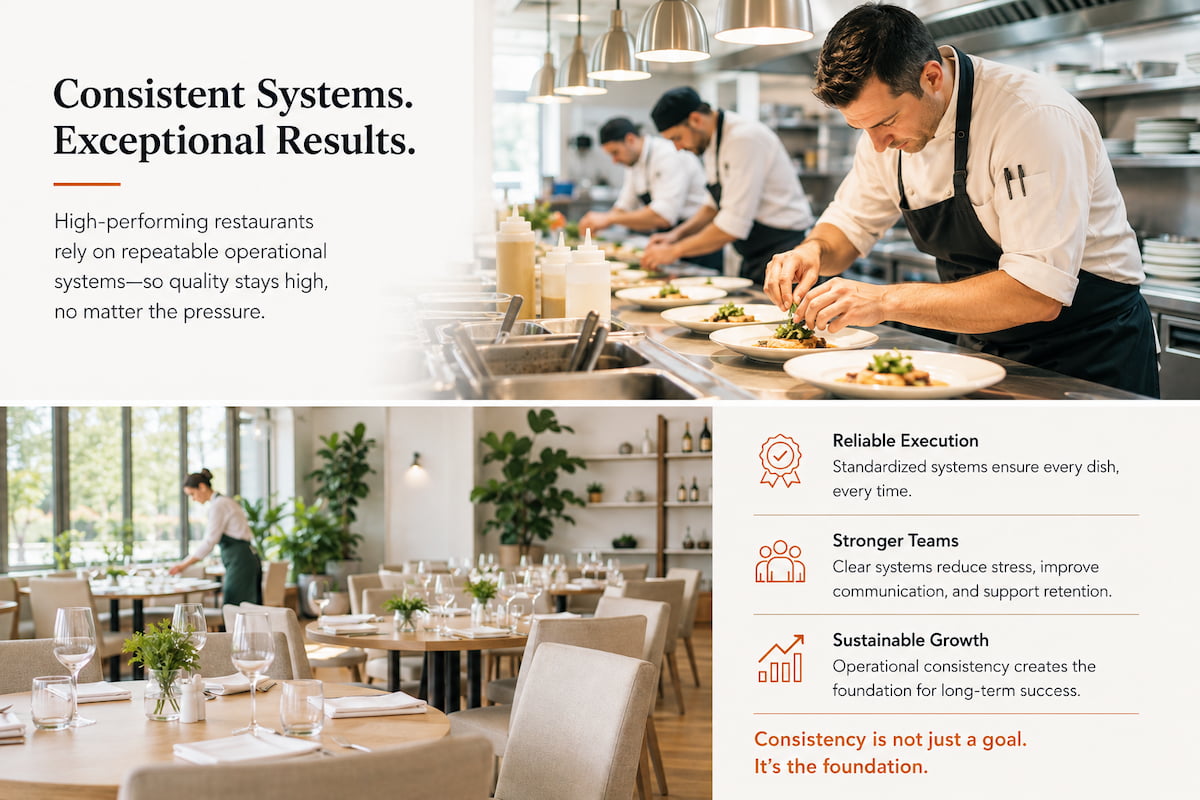
Why Operational Consistency Matters
Stability During Pressure
Restaurants operate in demanding environments where execution must remain stable during staffing shortages, guest surges, service delays, and operational disruptions. Consequently, even talented teams often struggle when systems are weak or inconsistent.
Furthermore, strong operational structure improves communication, service pacing, kitchen coordination, leadership accountability, and guest experience reliability throughout every shift.
Consistency Builds Trust
Ultimately, guests rarely remember isolated moments of brilliance alone. Instead, they remember whether the overall experience feels dependable every time they visit. Therefore, restaurants that maintain stable execution often build stronger long-term guest loyalty.
Why Talent Alone Often Fails
Dependency on Key Staff
In many cases, restaurants rely heavily on a few high-performing individuals. Although this may temporarily strengthen operations, it frequently creates instability when systems are undocumented or poorly organized.
For example, a talented sous chef may successfully carry service during peak hours. However, without prep systems, communication standards, and organized station structure, the broader team often struggles independently.
Leadership Without Systems
Similarly, restaurants that depend entirely on charismatic leadership often experience operational decline during management transitions or periods of increased service pressure.
The Systems High-Performance Restaurants Depend On
Kitchen Workflow Systems
Additionally, high-performing restaurants usually depend on structured operational systems throughout the kitchen and dining room.
Training and Accountability
In addition, strong onboarding systems, leadership accountability, and clear staff expectations help restaurants maintain execution quality across all shifts and service periods.
Operational Discipline Reduces Burnout
Reducing Service Chaos
Weak operational systems often create unnecessary stress during busy service periods. Consequently, teams become reactive instead of organized.
- Communication breakdowns
- Late prep completion
- Missed tickets
- Inconsistent execution
- Unclear responsibilities
- Management frustration
- High employee turnover
Supporting Team Retention
On the other hand, organized systems create smoother workflows, clearer expectations, and more sustainable working environments for both management and staff.
How Michelin-Level Restaurants Approach Operations
Precision Behind the Scenes
Additionally, restaurants operating at Michelin-recognized standards typically maintain highly disciplined operational systems behind the scenes.
Why Structure Supports Creativity
Although guests often focus on culinary creativity, high-level restaurant execution depends heavily on kitchen organization, communication standards, prep structure, and coordinated service systems that support consistency over time.
Why Systems Become More Important as Restaurants Grow
Growth Exposes Weaknesses
As restaurants grow, operational weaknesses become increasingly visible. Therefore, service volume often amplifies inefficiencies that previously seemed manageable.
Systems Support Expansion
Meanwhile, strong operational systems improve onboarding, workflow coordination, quality control, leadership transitions, and long-term restaurant stability.
How Restaurant Owners Can Improve Consistency
Identifying Operational Bottlenecks
Therefore, restaurant owners should regularly evaluate where operational breakdowns occur most frequently.
- Kitchen workflow organization
- Leadership structure
- Prep procedures
- Communication standards
- Training systems
- Operational bottlenecks
- Guest experience consistency
Building Repeatable Standards
In many cases, relatively small operational improvements create significant gains in execution quality and long-term restaurant stability.
For restaurant operators across Vancouver and the Lower Mainland, operational consistency has become increasingly important as labour costs, guest expectations, and competitive pressure continue rising throughout the hospitality industry.
Frequently Asked Questions
Operational consistency helps restaurants maintain stable food quality, workflow coordination, leadership accountability, and dependable guest experiences across every service period.
Although talent is important, restaurants usually require strong systems, operational discipline, and leadership structure to maintain long-term consistency.
Prep systems, communication standards, workflow organization, quality control procedures, onboarding systems, and leadership accountability all contribute to stronger restaurant consistency.
Yes. Michelin-level restaurants usually depend on highly disciplined operational systems, kitchen coordination, prep structure, communication standards, and execution consistency.
Strong operational systems often reduce waste, improve workflow efficiency, strengthen guest retention, reduce turnover, and improve overall restaurant profitability.
Strengthen Your Restaurant Operations
Strong restaurant performance depends on more than talent alone. Operational consistency requires leadership structure, workflow organization, communication standards, and disciplined execution systems that remain reliable during pressure.
Restaurants seeking stronger operational structure and hospitality leadership development may also benefit from educational resources available through Online Culinary School .