
Restaurant SPLH: The Only Labor Metric That Actually Controls Profit
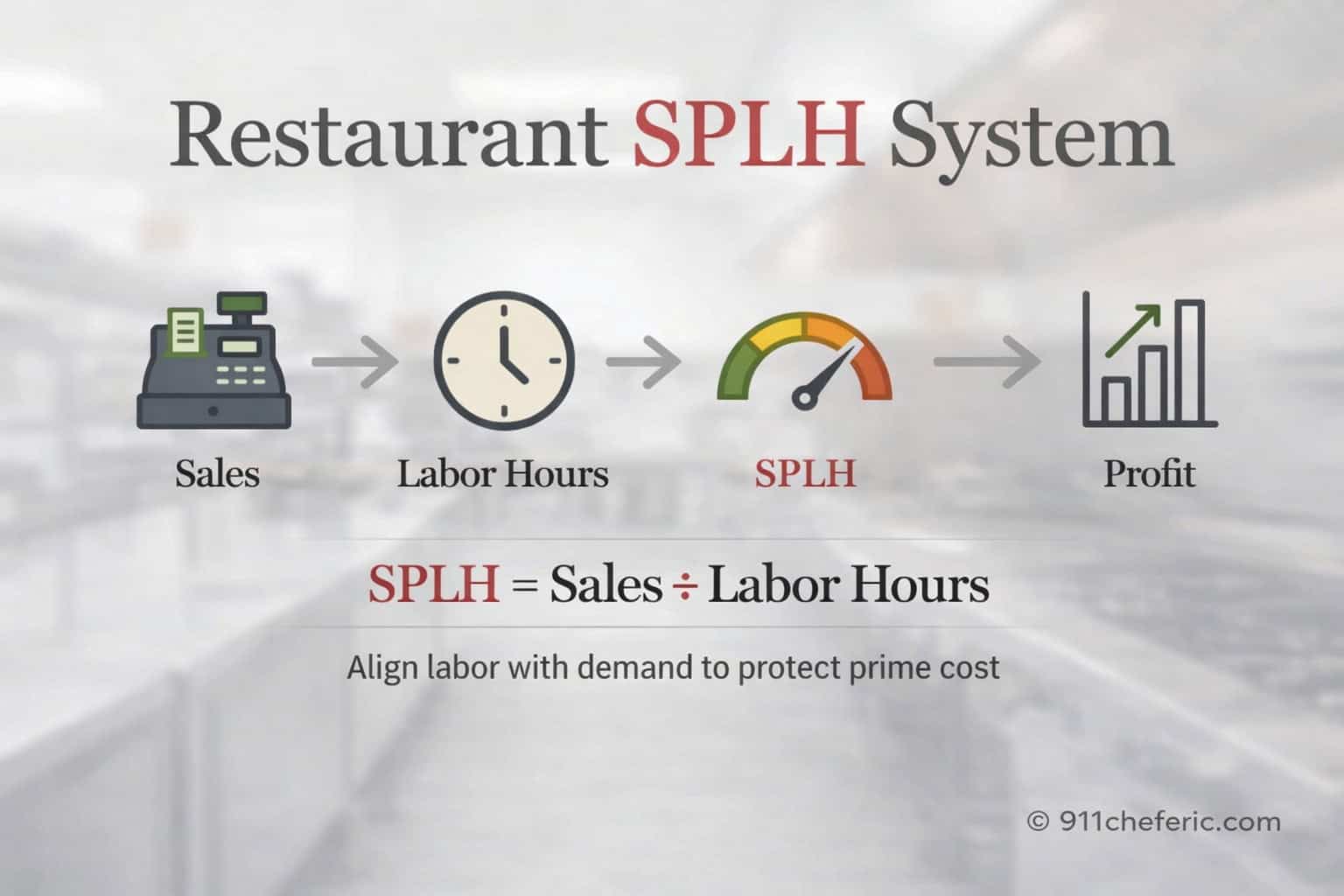
Restaurant SPLH is the metric that determines whether your labor is controlled or leaking profit daily.
Most operators track labor percentage. However, this metric reacts to sales instead of controlling performance.
What Is Restaurant SPLH (Sales Per Labor Hour)?
SPLH measures how efficiently your team converts labor hours into revenue.
Why SPLH Matters for Restaurant Profitability
Many restaurant owners track labor percentages but never build operational systems around labor productivity. As a restaurant consultant in Vancouver BC , I help operators implement SPLH tracking, labor forecasting, scheduling controls, and profitability systems that reduce labor cost while improving operational performance.
How to Calculate Restaurant SPLH (Operational Method)
| Step | Action | Example |
|---|---|---|
| 1 | Track total sales | $5,000 |
| 2 | Track total labor hours | 100 hours |
| 3 | Divide sales by hours | $50 SPLH |
This must be tracked daily and by service period to maintain control.
Tracking metrics alone is not enough. Managers must understand how to interpret SPLH data and make operational adjustments. Many operators use restaurant coaching to strengthen leadership skills, improve accountability, and turn labor metrics into actionable management decisions.
Why SPLH Matters in Real Operations
| Scenario | Without SPLH | With SPLH |
|---|---|---|
| Slow day | Overstaffed | Labor reduced to match sales |
| Busy service | Reactive staffing | Planned based on forecast |
| Weekly performance | Unclear trends | Clear productivity tracking |
Restaurant SPLH Benchmarks by Concept Type
| Concept | Typical SPLH Range |
|---|---|
| Quick Service | $60 – $90 |
| Fast Casual | $45 – $70 |
| Casual Dining | $35 – $55 |
| Full Service | $30 – $50 |
Restaurant SPLH Benchmarks by Region
| Region | Typical SPLH Range | Key Factor |
|---|---|---|
| North America | $40 – $80 | Higher labor cost |
| Europe | $30 – $60 | Balanced wage structures |
| Asia | $20 – $50 | Lower labor cost, higher staffing |
These variations reflect wage structure, service style, and operational expectations—not performance quality.
How to Use SPLH in Scheduling (Critical)
| Forecast Sales | Target SPLH | Required Labor Hours |
|---|---|---|
| $6,000 | $50 | 120 hours |
This is where most operators fail.
They build schedules first, then react to sales.
Instead, labor must be calculated from expected revenue.
Common SPLH Mistakes That Kill Profit
– Scheduling without sales forecast
– Ignoring daypart differences
– Tracking weekly only
– No accountability per manager
– Overstaffing “for safety”
Many SPLH problems are not caused by the metric itself but by inconsistent management execution. Through restaurant coaching , managers can develop stronger accountability systems, improve labor planning, and build the leadership skills required to maintain labor productivity targets consistently.
How SPLH Fits Into Your Labor System
SPLH is not a report. It is a control mechanism embedded inside your restaurant labor cost control system.
Many operators understand the concept of SPLH but struggle with implementation. Working with a restaurant consultant in Vancouver BC can help establish labor forecasting systems, scheduling controls, productivity metrics, and accountability processes that turn SPLH into a practical management tool.
Strategic Takeaway
Labor percentage is reactive.
SPLH is control.
If you are not using SPLH to build schedules, your labor system is not structured—and your profit is exposed.
If you don’t calculate labor from sales, you are guessing your profit. — Chef Eric
Frequently Asked Questions
What is SPLH in restaurants?
SPLH (Sales Per Labor Hour) measures how efficiently your team converts labor hours into revenue. It directly impacts your restaurant prime cost.
Should managers be included in SPLH calculations?
Yes. SPLH should include all labor hours, including managers, supervisors, front-of-house, and back-of-house staff. Excluding labor categories creates inaccurate productivity measurements.
Is SPLH better than labor percentage?
Yes. Labor percentage reacts to sales fluctuations, while SPLH measures real productivity and allows operational control.
How do you calculate SPLH?
Divide total sales by total labor hours. Track daily and by service period for accurate control.
What is a good SPLH for a restaurant?
Most full-service restaurants operate between $30 and $50 SPLH depending on concept and service model.
How does SPLH improve profitability?
SPLH aligns labor hours with sales. When labor matches demand, prime cost stabilizes and profitability improves.
Improve Restaurant Labor Productivity and Profit Control
SPLH systems align labor hours with revenue, improve scheduling accuracy, stabilize prime cost, and strengthen restaurant profitability.
Work with a restaurant consultant in Vancouver BC to improve labor forecasting, operational systems, scheduling discipline, and restaurant cost control.